
The 25 Most Philly Athletes of All Time
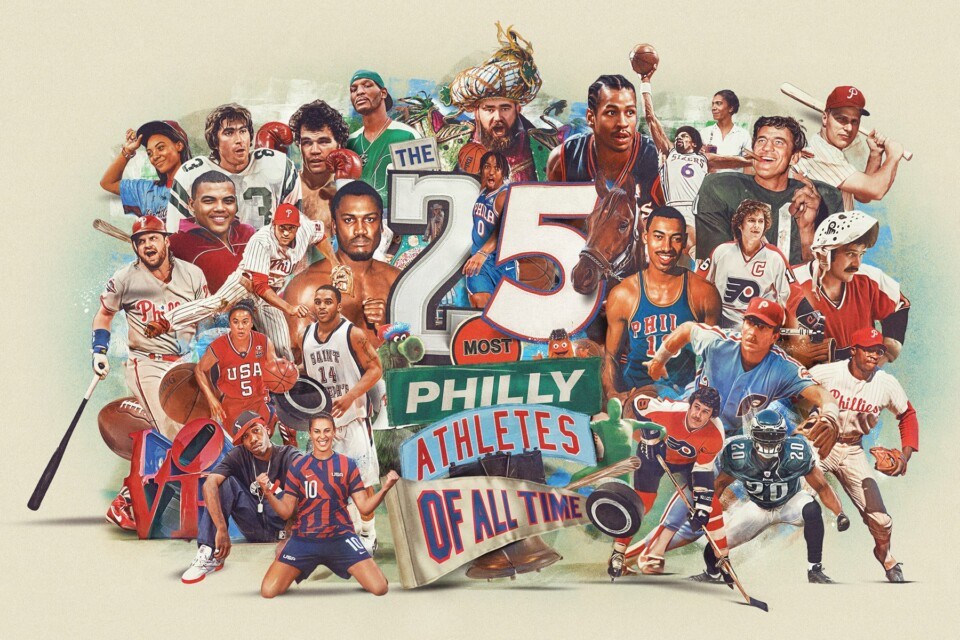
Let the debates begin! / Photo-illustration by Neil Jamieson
On May 20, 1871, the Athletic Base Ball Club of Philadelphia took to the field in front of 2,500 fans for the very first professional sports game ever played in Philadelphia. They lost 1–0; it’s unknown how many fans called WIP after the game to complain.
Ever since that first game, this city has had a love affair with the pitchers, running backs, middleweights, goalies, point guards, and thoroughbreds who have called Philadelphia their home. We have a parasocial relationship with our athletes, one born of years — decades — of frustration that occasionally combusts into parades down Broad Street.
But what does it mean to be not just a Philadelphia athlete, but a Philly athlete? There’s no single definition. There’s an underdog aspect to it for sure. Blue-collar. Gritty — the adjective, not the orange blob (though we love them, too). Most Philly athletes aren’t from here but manage to feel of here, pulled to this city as if by fate. They’re not always the biggest names or the brightest stars — though many are — but they’re the names that first come to mind when you think about all those attributes.
In fact, if you think about it, some of the biggest names in Philly sports history don’t really check those boxes, do they? In the end, we had to settle for the fact that, sometimes, you just get a feeling about someone.
So, here, we present the 25 Most Philly Athletes of All Time.
25
Photograph via Getty Images
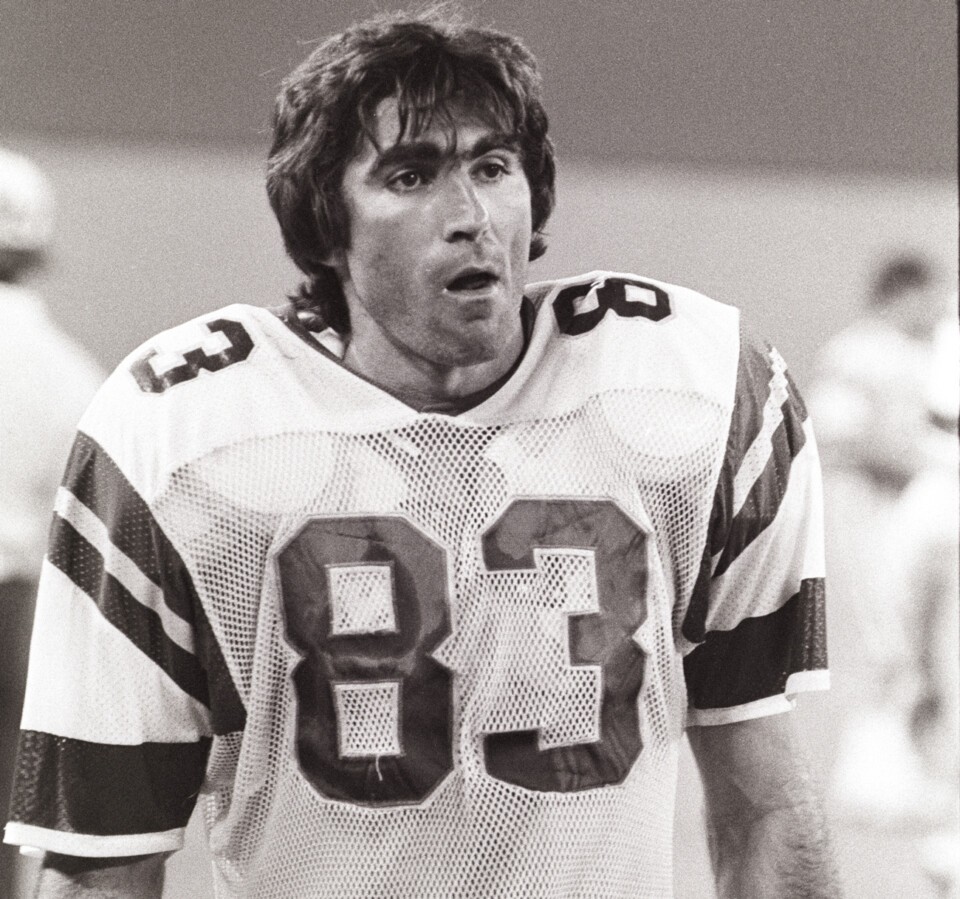
Vince Papale
Football
Let’s ignore the pabulum that was Invincible and just focus on the subject. On Vince. Is there anywhere other than Philly in the ‘70s where a teacher with no college football experience could wind up not only playing for the Eagles, but playing 41 games? Where a former high school pole vaulter can step into the league at 30 goddamned years of age and become a captain? The answer, of course, is no. Papale is a cipher through which we can view the whole city. If you understand him, and why he’s so special, you immediately get Philly. If not? Maybe just head back up 95 to New York. — Bradford Pearson
24
Photograph via Getty Images
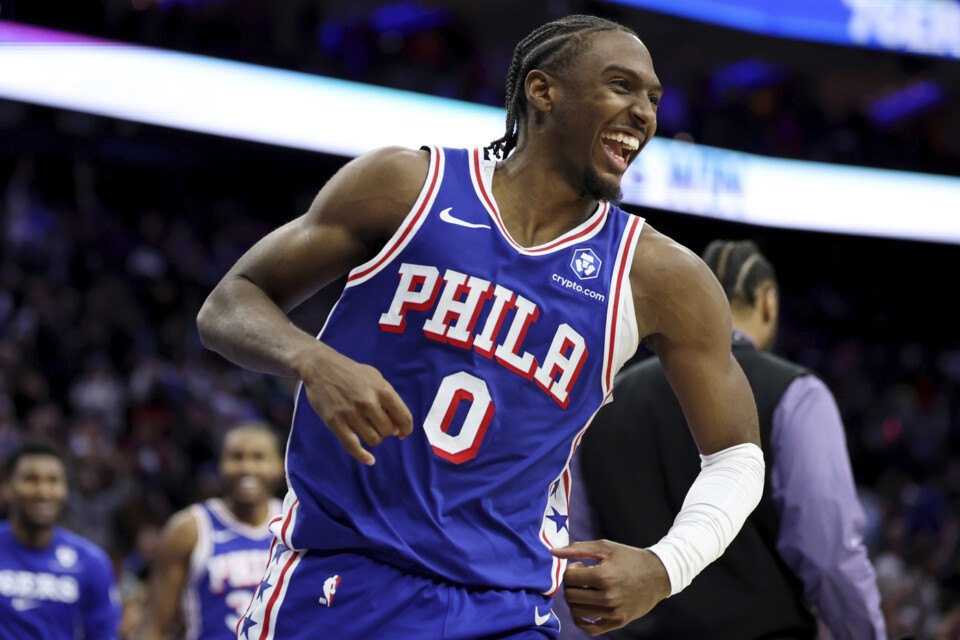
Tyrese Maxey
Basketball
Is it premature to slot Maxey here? Maybe. But here’s what we know six years into his career: Maxey’s the truth. He’s exactly what Philly yearns for in a franchise player. Overlooked. (He slipped to 21st in the NBA Draft.) A grinder. (How many players can you think of who have gotten better every season they’ve been a pro?) Tough. (As of press time he was averaging a combined 2.9 steals and blocks per game, and could become the first point guard since Gary Payton in 1996–97 to average more than three. Oh and he’s dropping 30 points a game.) Beloved. (Just look at that smile.) Yeah, he’s still pretty young, and yeah, this could all still go sideways. But we bet that when you reread this in 20 years you’ll wonder why he was so low on the list. — B.P.
23
Photograph via Getty Images
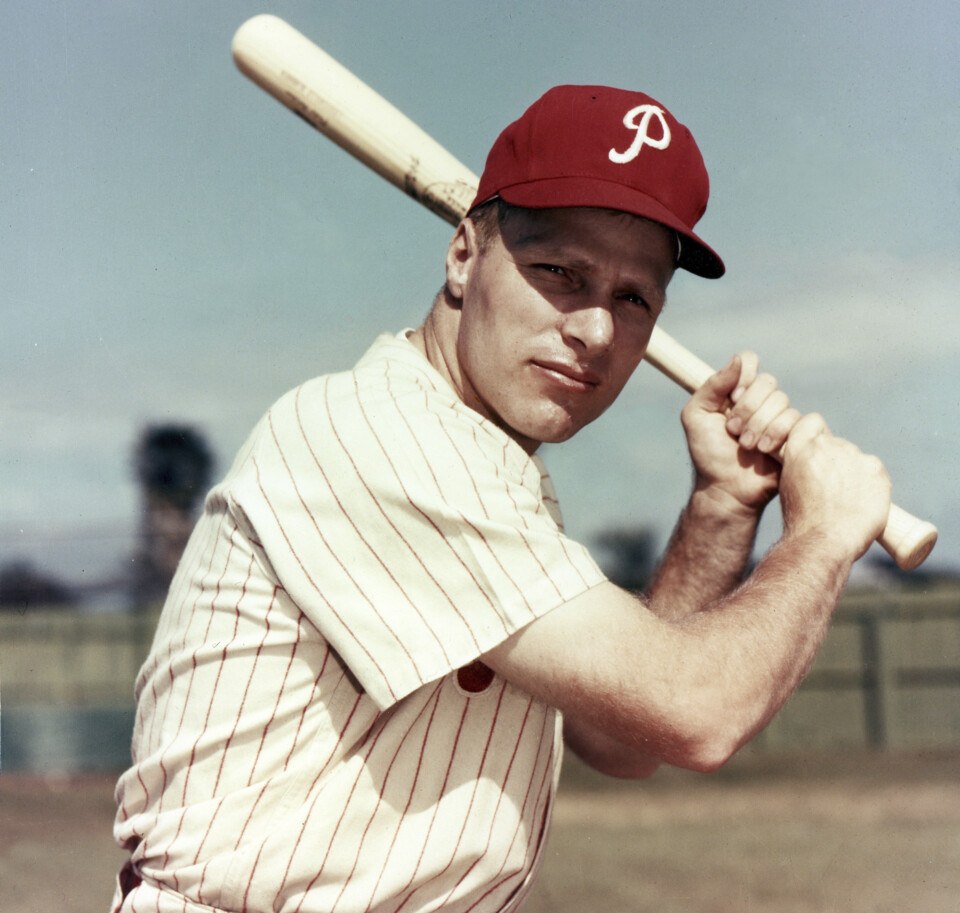
Richie Ashburn
Baseball
On July 30, 1995, Ashburn stood at a lectern in Cooperstown, New York, and stared out at the crowd — tens of thousands of people clad in Phillies red, the largest crowd ever to attend a National Baseball Hall of Fame induction. The lightning-fast center fielder and longtime announcer, who’d waited 28 long years for the honor (fans had taken to plastering “Richie Ashburn: Why the hall not?” bumper stickers on their cars), addressed the throng with the self-effacing wit that had endeared him to Philadelphians for nearly five decades: “Well, they didn’t exactly carry me in here in a sedan chair with blazing and blaring trumpets.” Two years later, when Ashburn unexpectedly died of a heart attack, thousands of fans waited hours in the September mugginess to touch his cherry casket and pay their respects; his body lay in state in Fairmount Park’s Memorial Hall, a tribute typically reserved for presidents and senators, but this time paid to the closest version Philly had to that — Richie Ashburn. — B.P.
22
Photograph via Getty Images
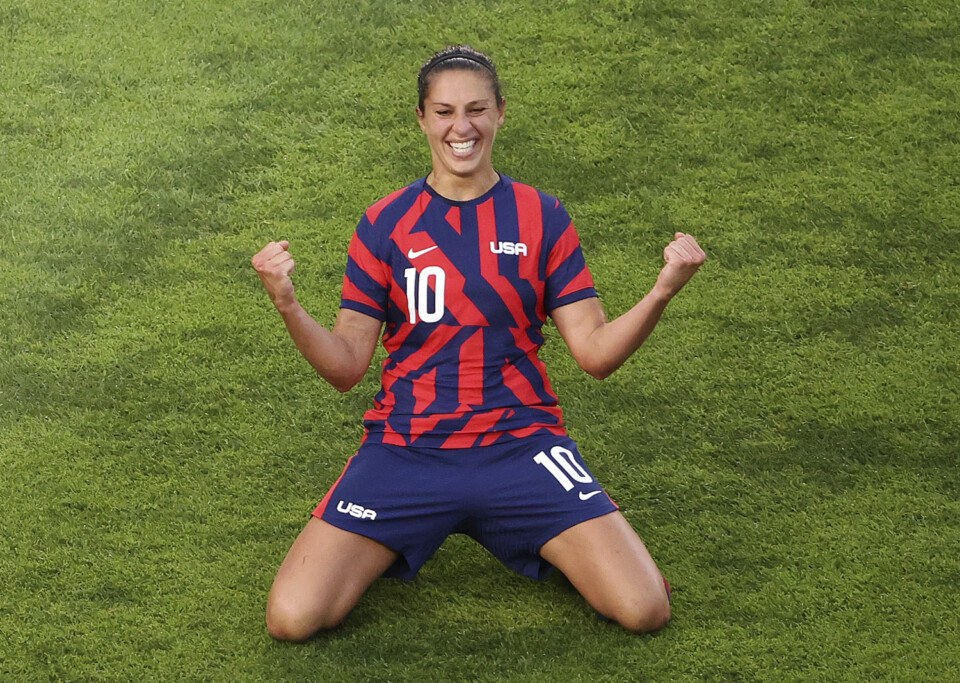
Carli Lloyd
Soccer
“I operated like an emotionless machine,” Lloyd said on May 3, 2025, in a speech during her induction into the National Soccer Hall of Fame. “I was intense, and I truly believed that the only way for me to survive in such a cutthroat environment was to be that way.” And this was during an apology, to her teammates, coaches, and all of us, really, for her attitude during her 17-year soccer career. It’s true, the Delran native was all of those things. She also demanded excellence from herself — after every Women’s National Team game, Lloyd would return to the pitch for sprints and push-ups. And when she blasted a hat trick in just 16 minutes during the 2015 World Cup final? When she hoisted that trophy not once but twice? When she scored the gold medal– winning goals in two (two!) Olympics? We all saw the reward. — B.P.
21
Photograph via Getty Images
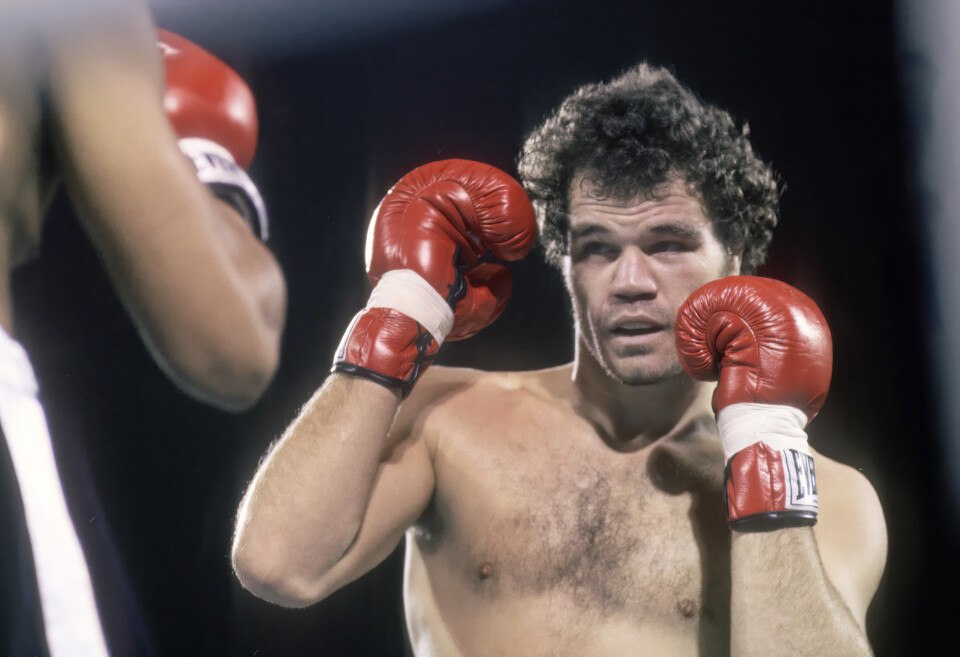
Randall “Tex” Cobb
Boxing
Whether you knew him as the bouncer at Doc Watson’s Pub, the “Warthog From Hell” in Raising Arizona, or the heavyweight contender with the granite chin, Cobb was a Philly legend. A native Texan, Cobb moved here in 1975 after hearing he could get paid for getting hit in the face. Soon he was the only white boy taking daily punishment at Joe Frazier’s North Philly gym.
That was Cobb’s great talent: taking a punch. He’d lead with that scarred mug of his until opponents grew tired of hitting it. Though he beat heavyweights like Earnie Shavers and Leon Spinks, he is best remembered for losing 15 of 15 rounds in a 1981 title loss to Larry Holmes. The beating was so brutal it drove Howard Cosell to quit announcing the sport. “Unless I cure cancer,” Cobb quipped, “retiring Howard will be my gift to mankind.”
His toughness extended beyond the ring to Philly’s most infamous street brawl. In Grays Ferry, Cobb — a karate black belt — defended Daily News columnist Pete Dexter against a mob of some 30 men armed with bats and tire irons. Later, when friends funded his religious studies at Temple University, the fighter and sometime movie actor remained unsentimental and witty: “Listen, sunshine, you’d be looking for God too if you’d spent 50 years getting hit in the mouth.” — Larry Platt
20
Photograph by Chris Lachall
Stevie Williams
Skateboarding
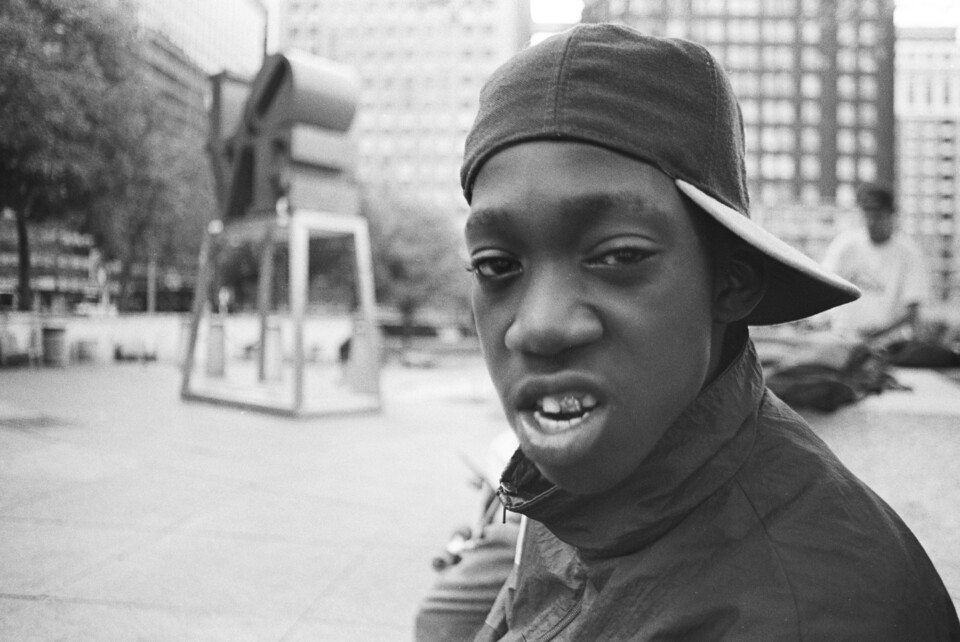
In the late winter of 1994, Transworld skateboard magazine came to shoot its first-ever photo package of LOVE Park, the gray and pink granite palace of street skateboarding in the shadow of City Hall.
A young Black skateboarder caught the photographer’s eye. “Don’t shoot those kids — they’re just dirty ghetto kids,” another skater said. But the photographer was undeterred, and soon images and videos of Li’l Stevie Williams rocketed across the skateboarding world, bringing the just 14-year-old Williams and his scuzzy pack of LOVE Park friends to magazine racks and VHS players around the world.
By 1999, Williams and Josh Kalis had taken over the LOVE Park scene, planting a flag for Philly as the skate capital of the East Coast. It wasn’t all smooth — Williams spent much of his late teenhood homeless, broke, and drinking too much — but all that changed by 2000, with shoe deals and deck deals and his face plastered on billboards from here to San Francisco. When Williams struck out to launch his own skate brand in 2002, there was only one name it could be: DGK. Dirty Ghetto Kids.
A decade ago, after years of confiscating boards and arresting and hounding the skaters who spent their days and nights there — trying, hoping, to follow in Williams’s footsteps and kickflips — the city of Philadelphia finally tore down LOVE Park, ripping out the granite ledges and fountain that traveled the world in tattered skate magazines and on worn-out VHS tapes. During the demolition Williams walked in and sobbed at the sight of it. It was a gut punch. A loss. But also, sort of a win: How many athletes can say they were so good at their sport, so inspiring, that their arena was destroyed because of it? — B.P.
19
Photograph by Doug Pensinger/Getty Images
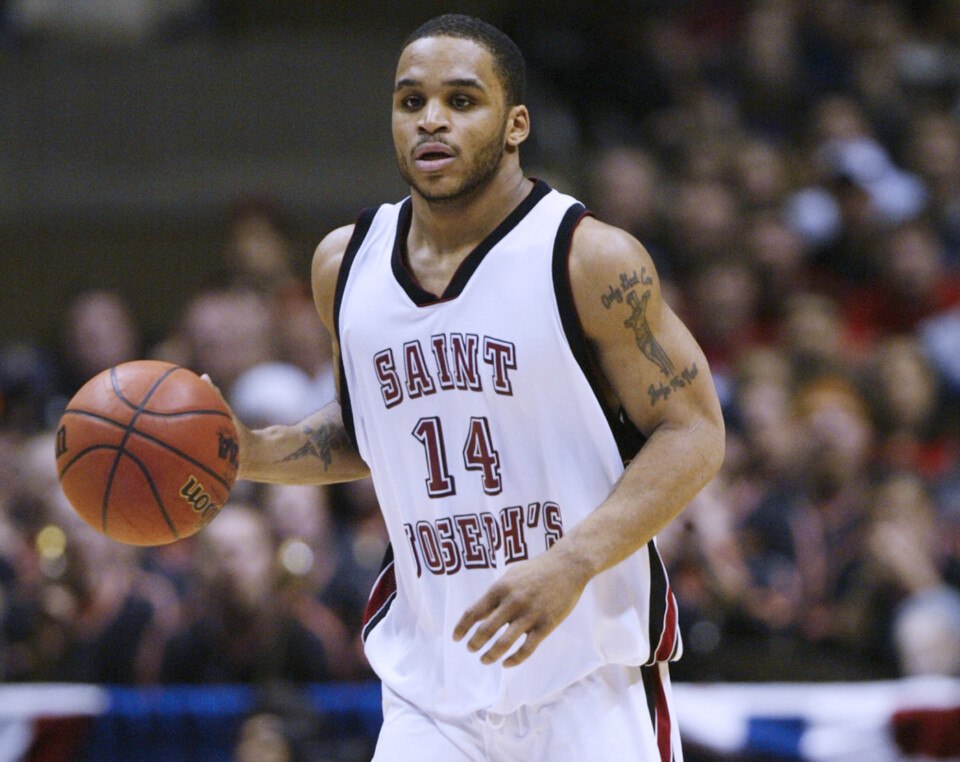
Jameer Nelson
Basketball
The February 16, 2004, Sports Illustrated cover told the whole story in just 13 words: “Meet Jameer Nelson, the little man from the little school that’s beating everyone.” Of course, there was a lot more story there, like how Nelson honed his game on Chester’s 7th Street Courts; how the little man — he was listed at six feet but that always seemed aspirational — escaped the crime and murder of his hometown for Hawk Hill, where he led St. Joe’s to a 27–0 regular season in his senior year; how he captivated a whole city and a whole country as the little school climbed the rankings all the way to number one. That could be the whole story, and it would be enough. But then the little man goes to the NBA, and not only plays but becomes an All-Star. And then that All-Star, every summer, brings his younger Orlando Magic teammates back to his childhood home in Chester, to show them how a life can start, and how life, if you work really, really damn hard, can become something much bigger than you could ever imagine. — B.P.
18
Photograph by Rob Carr/Getty Images
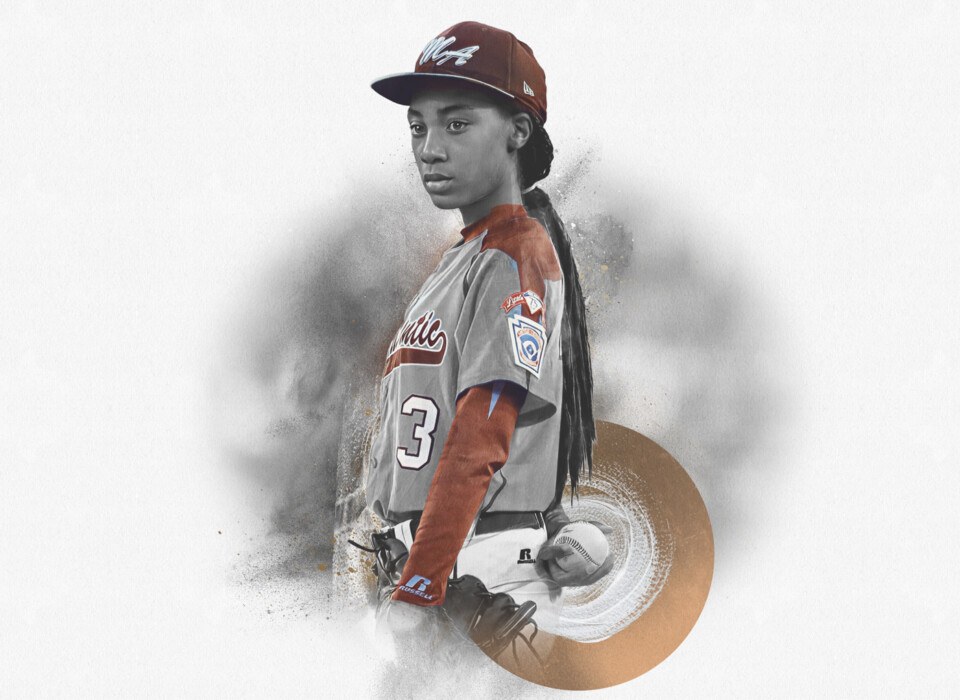
Mo’ne Davis
Baseball
Mo’ne Davis celebrated her 13th birthday six weeks before the 2014 Little League World Series, in which she became the first girl in series history to earn a win as a pitcher. She did it with a shutout.
Back then, it was clear that there was something special about Davis. On the cover of the August 25, 2014, issue of Sports Illustrated (she was also the first Little Leaguer to earn that honor), she’s a skinny kid with a thick, low ponytail of braids, wearing her team’s retro blue and burgundy Mid-Atlantic uniform. Her cheeks puff as she exhales and delivers a fastball.
“Remember her name” the cover says, and readers — and anyone who saw that ball come in at 70 mph — complied. Clearly, this kid was confident. Strong. A standout. Atop the mound of a sport men, largely white men, have dominated for going on 180 years, she, a Black girl from South Philly, represented a change, something bigger than herself. Something revolutionary, you might say.
Davis’s team performed well in Williamsport, exiting after falling to and then throwing their support behind the eventual winners of the whole thing, Jackie Robinson West, representing Washington Heights, Chicago. All the while, kids, baseball fans, Mike Trout, Kevin Durant, and Michelle Obama cheered on Mo’ne — by then a one-name star. She belonged to Philly, for sure, but she also belonged to something bigger: a movement to make the sport more inclusive, the unfulfilled promise of women’s sports, and something else, too.
Davis had her own story, and we gobbled it up. How, at age seven, she caught the eye of coach Steve Bandura. He was dragging the infield at the Marian Anderson Rec Center at 17th and Fitzwater; she was throwing a football in the outfield. Keep reading …
17
Photograph by Herb Scharfman/Sports Imagery/Getty Images
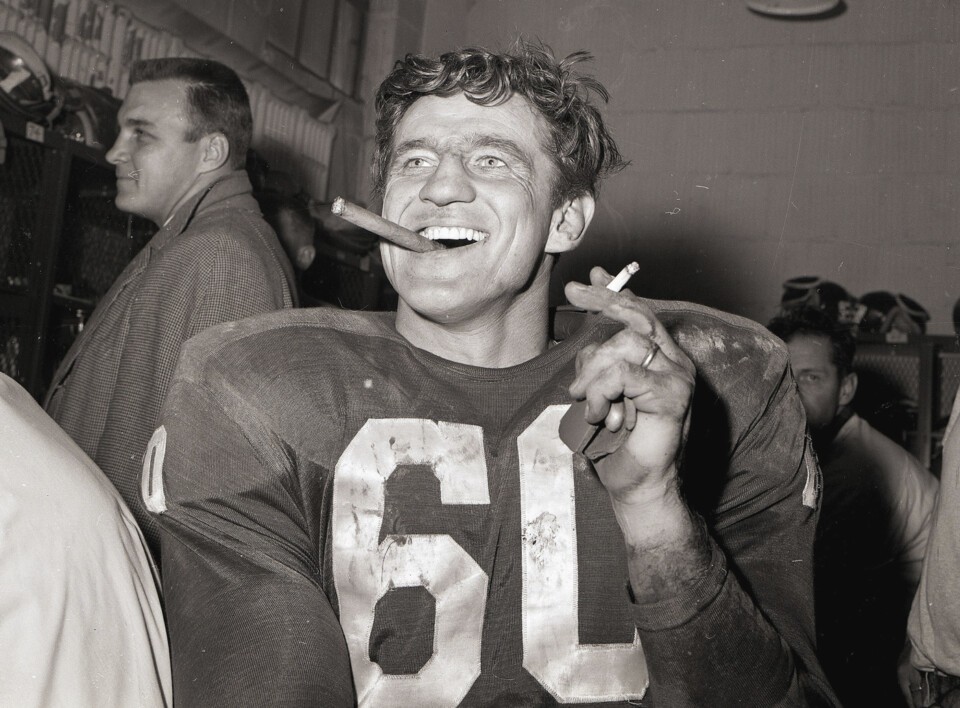
Chuck Bednarik
Football
If workmanlike toughness is a Philly-specific phrase, there might be no athlete more emblematic of the city than Bednarik, the Eagles linebacker and center who spent his falls and winters making ferocious tackles and his offseasons selling concrete. The Bethlehem, Pennsylvania, native earned All-America honors at the University of Pennsylvania, then became an iron man in kelly green, missing just three games from 1949 to 1962. In between, “Concrete Charlie” earned eight Pro Bowl invitations and was named an All-Pro six times, and his No. 60 was retired in 1987. His style was unrelenting — and matched his numerals. Known as “the 60-minute man” for playing every down, the two-way athlete relied on a killer instinct he acquired as a fighter pilot during World War II, dodging shrapnel and gunfire over Germany. Those harrowing near-death experiences helped put the gridiron in perspective, but they also gave him an edge over his opponents. According to Slate, the first-ballot Hall-of-Famer’s vicious hit on the Giants’ Frank Gifford became an iconic photo and “perfect NFL propaganda,” while his tackle of Packers running back Jim Taylor secured the Eagles a 1960 championship. “I don’t think anyone 100 years from now will remember me,” Bednarik told Philly Mag a decade before his death in 2015. Didn’t he know? You should never underestimate Philly’s collective memory. — Jake King-Schreifels
16
Photograph by Craig Durling/WireImage
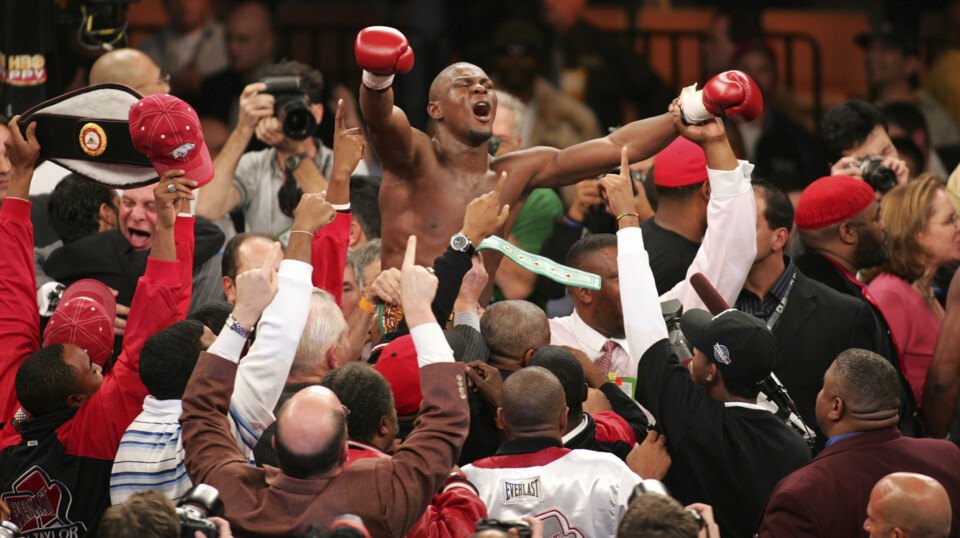
Bernard Hopkins
Boxing
Hopkins was a boxing champion who carried a very Philly trait: a huge chip on his shoulder, a resentful belief that he’d been shortchanged and underestimated. His career was an athletic grudge against the establishment, a war against the world. Hopkins, who grew up in survival mode on Germantown Avenue, did time at Graterford for youthful crimes; when he got out, with his jailers joking he’d be back soon, he dedicated his life to proving his doubters wrong. He won one battle after another, reaping growing purses and vindication. After he shockingly beat Antonio Tarver in 2006, defying every expert naysayer in the media as a 41-year-old three-to-one underdog, he strode to the side of the ring where the press rows were and just glowered at everyone. It was part of his celebration. Hopkins held the world middleweight title for a decade. Tactical in the ring rather than bombastic (some might even say dull), he outboxed greats like Oscar De La Hoya and Roy Jones. By avoiding damaging slugfests, he kept his body unharmed enough to win a 2011 title at the record age of 46 (then breaking his own record by winning titles at 48 and 49, as well), and he kept his mind sound enough to thrive as a promoter and investor. “The Executioner” had fans in the city, but he never really opened himself up to connect with the public as a local celebrity. Resentment is hard to shed; it’s not entirely clear how much he even liked his fans. — Don Steinberg
15
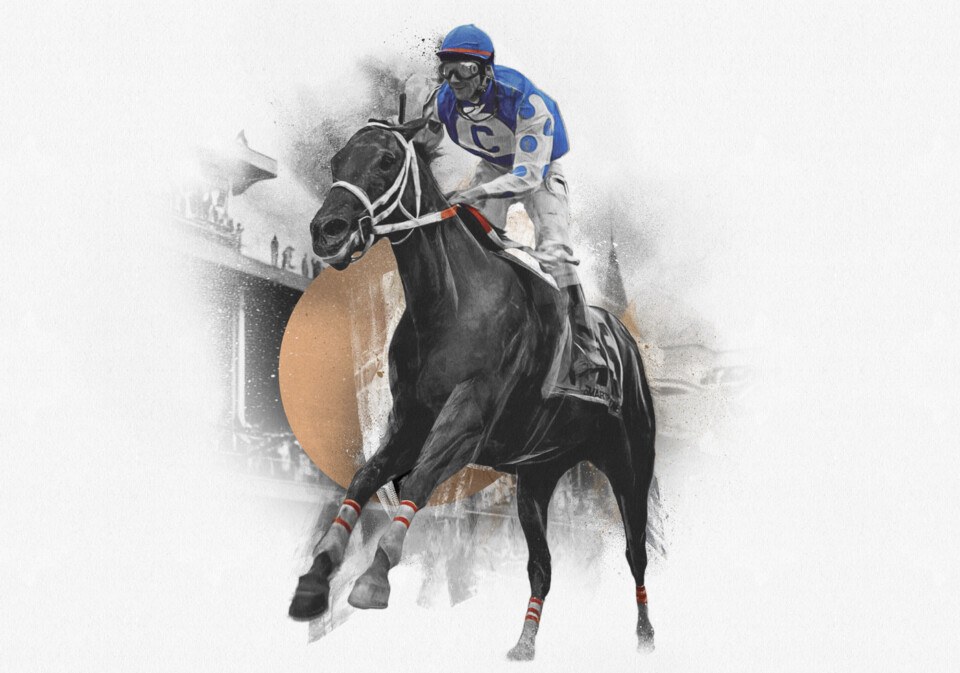
Photo-illustration by Neil Jamieson; photograph by Andy Lyons/Getty Images
Smarty Jones
Horse Racing
How does an elite racehorse, a descendant of Secretariat, become a symbol of Philadelphia blue-collar grit? Smarty Jones was born on a 100-acre Chester County farm owned by a wealthy auto dealer, and after winning $7.6 million in a seven-month career, began a cushy retirement impregnating mares as a $50,000-a-pop stud. But this city saw fierce determination in the muscular chestnut colt, our homegrown underdog blowing past the stodgy blue bloods.
Smarty blazed to win the Kentucky Derby and Preakness Stakes in May 2004, then lost his lead in the heartbreaking final strides of the Belmont, barely missing the Triple Crown in June. He was a constant front-page story. Thousands gathered at Philadelphia Park in Bensalem, his home track, to buy Smarty hats and T-shirts and watch the hometown hero run those Triple Crown races on TV. Hundreds road-tripped to Baltimore for the Preakness, chanting E-A-G-L-E-S in the rowdy Pimlico infield.
Part of the craze was that the city was desperate for a winner. “We need Philly to win something, man. It’s been a long time,” one fan who made the pilgrimage to Belmont Park told the Inquirer. Still, there were legit reasons why we thought of Smarty as one of us, says Mike Jensen, who covered that remarkable story at the Inquirer. “Horses training at Philadelphia Park weren’t supposed to go to the Kentucky Derby, let alone win it,” he says. “Derby winners were supposed to have regal names, not ones more appropriate for your neighbor’s dog. They were supposed to be owned by Kentucky blue bloods, not cranky Philadelphia car dealers.”
The more we learned, the more Smarty became Philly. His trainer, John Servis, “talked like he was holding a beer at a barbecue,” Jensen says. Jockey Stewart Elliott was scrappy — he’d literally been in a few scraps — and had toiled for years in the mud at Philadelphia Park (now Parx Casino). Owner Roy Chapman, who rode in a wheelchair, and his wife, Pat, gabbed like grateful neighbors who’d hit the lottery.
Amid our high hopes, Smarty’s second-place finish at the Belmont was the sort of disappointment we knew well. “We’ve yet again been taken to the woodshed,” one crushed Philly fan said. “But we’re like Rocky. You can knock us down, but we’ll keep getting back up.”
More than 10,000 people gathered at the horse’s retirement ceremony at Philadelphia Park that August, grandparents and kids, husbands and wives. People fantasized about buying his offspring. The state senator thanked Smarty for the wild ride. Women cried as Smarty gallantly walked his final furlongs on the track, with a bandaged leg. “He was from the other side of the tracks, and he left them all in the dust,” one of them told the newspaper. — D.S.
14
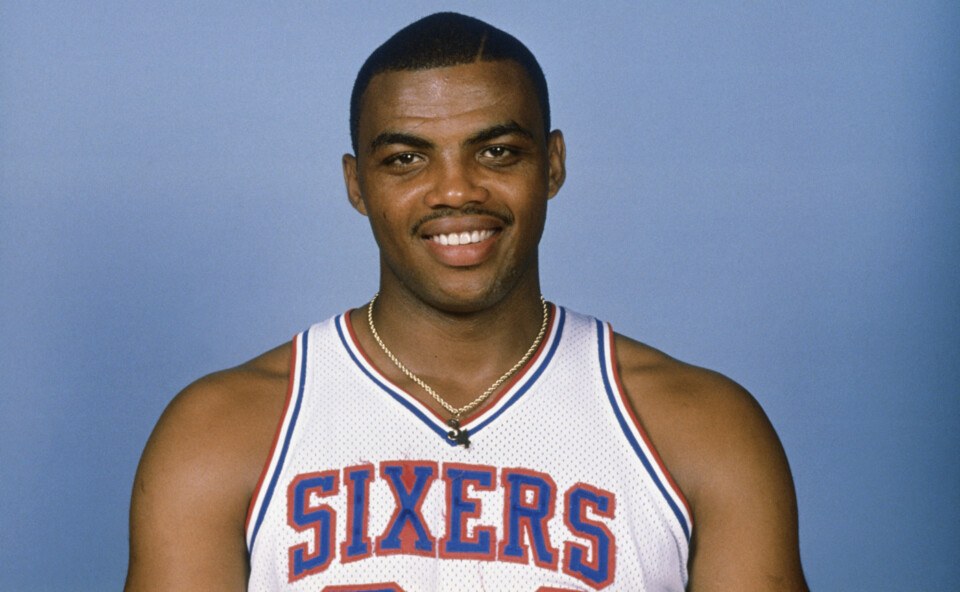
Photograph via Getty Images
Charles Barkley
Basketball
Today, Barkley is a wisecracking TV icon, a GLP-1 pitchman, and the former owner of the worst golf swing you’ll ever see. (He’s been working on that last part.) But for the Sixers in the late ’80s and early ’90s, the Round Mound of Rebound was a freight train — an undersized power forward who dominated through sheer will.
Off the court, Sir Charles was a lightning rod who famously challenged the notion of athletes as role models. Once he claimed to be misquoted — in his own autobiography. Yet he remained disarmingly human. When Magic Johnson announced his HIV diagnosis in 1991, Barkley opened his arms while others in the NBA recoiled. “I’m disappointed in myself for not having had the compassion for others with HIV that I now have for Magic,” he said.
His generosity knew no bounds. He secretly funded the college education of a busboy at South Street’s Bridget Foy’s and befriended a local cop’s family, taking them across the globe for decades. On the court, he was peerless, winning the 1993 MVP award and retiring as one of only six players with 20,000 points, 10,000 rebounds, and 4,000 assists.
Recently, while he was holding court at a favorite Main Line watering hole, his wife, Maureen, corrected his grammar. Barkley didn’t miss a beat: “Would you rather I say ‘I is rich’ or ‘I am poor’?” Laughter and drinks all around. After all the slam dunks, that’s what people in Philly still talk about: that time they met Charles Barkley and he made them a memory. — L.P.
13
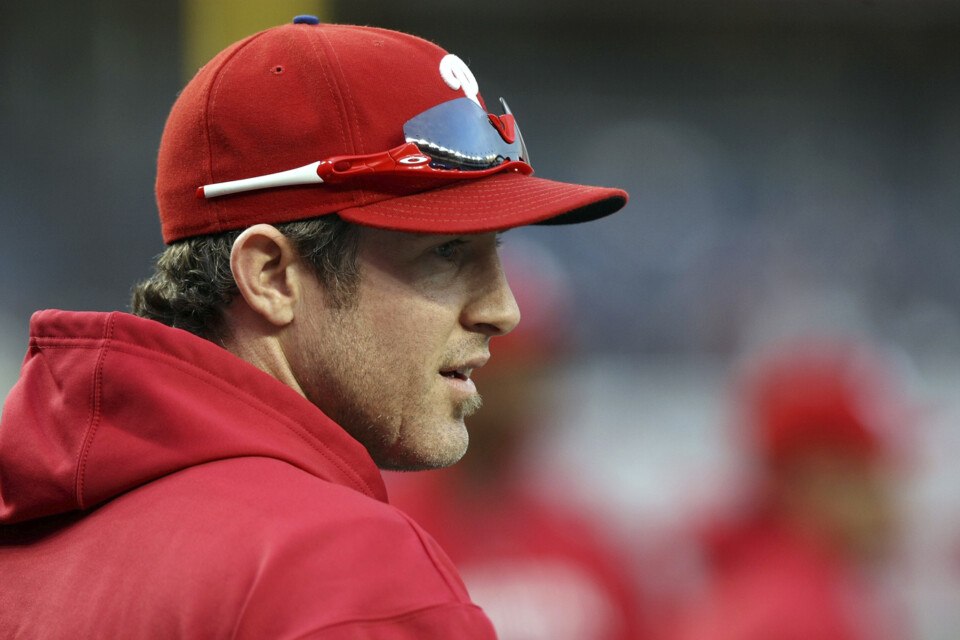
Photograph via Getty Images
Chase Utley
Baseball
“World champions …
That alone would be enough, right? But if the very same Phillies second baseman who delighted us with his potty mouth on live TV hadn’t also faked that throw to first and fired home in Game 5 of the 2008 World Series, who knows if Brad Lidge would have closed out a 4–3 win that night?
“Chase Utley, you are The Man!” Harry Kalas had proclaimed a few years earlier. Which is a far more Philly title than National League MVP (Ryan Howard, Jimmy Rollins) or World Series MVP (Cole Hamels).
This city loves its less talented heroes who play hard way more than its superstars whose very gifts make it appear they don’t. Pete Rose was Charlie Hustle. Jimmy Rollins once got benched because he didn’t hustle. With Utley, we got both an unstoppable work ethic and — ahem — Hall of Fame–worthy talent. Plus, rescue dogs! And he actually lived in Philadelphia.
Utley was also a player who’d do anything to win, which, yeah, is a euphemism for “could be a little dirty.” So even though it stank to see him finish his career in hated Dodger blue, his time in Los Angeles still delivered one last oh-so-Philly moment: that leg-breaking take-out slide into Mets shortstop Ruben Tejada in Game 2 of the 2015 National League Division Series. Between that and all those home runs he hit to “Utley’s Corner” at Citi Field, there’s no Philadelphia player who’s more hated by New York. What could be more fucking Philly? — Jason Cohen
12
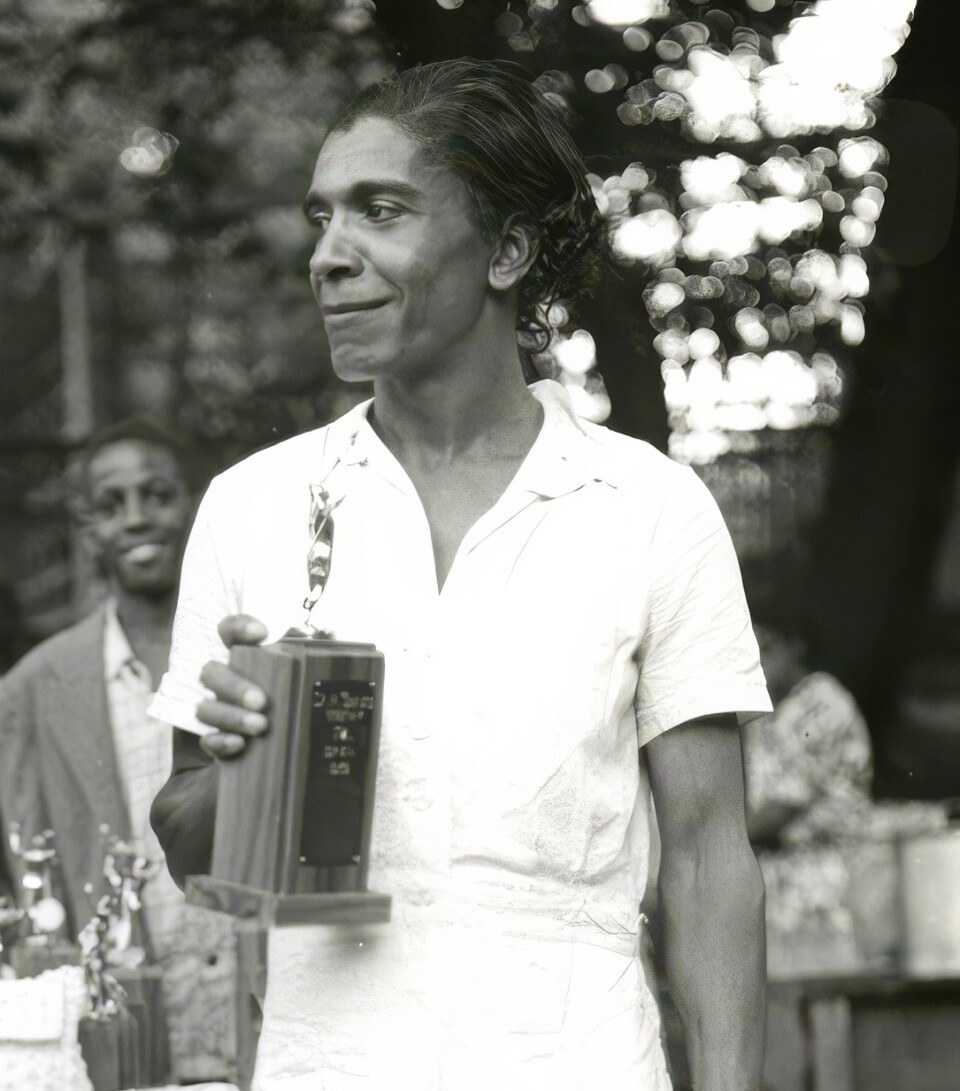
Photograph by John W. Mosley/Temple University Libraries, Charles L. Blockson Afro-American Collection
Ora Washington
Tennis & Basketball
Time can’t dim the accomplishments of Washington. Born on a farm in Virginia circa 1899, she moved north after her mom died in childbirth — she was the fifth of nine kids — to join family in Germantown, where she worked as a live-in servant. She also learned to play tennis at the Germantown YWCA. In 1924, she won the singles, doubles, and mixed doubles championships of Wilmington, Delaware; the following year, she won her first national championship, in doubles — a title she held for the next 11 years. By 1937, she’d won the national singles title eight times. The following year, she announced her retirement, saying, “It does not pay to be the national champion for too long. It is the struggle to be one that counts.” She later mounted a successful comeback, though she never could face off against white opponents due to segregation.
She didn’t need ’em: Astonishingly, she had already won multiple national basketball titles, starting in 1930 with the Germantown Hornets, for whom she played center for 18 years — losing just six games in all that stretch. Considered the greatest African American athlete of her day, she inspired the MVP statue at Smith Memorial Playground — and presaged such unyielding, uncompromising Philly sports iconoclasts as Dick Allen and Allen Iverson. — Sandy Hingston
11
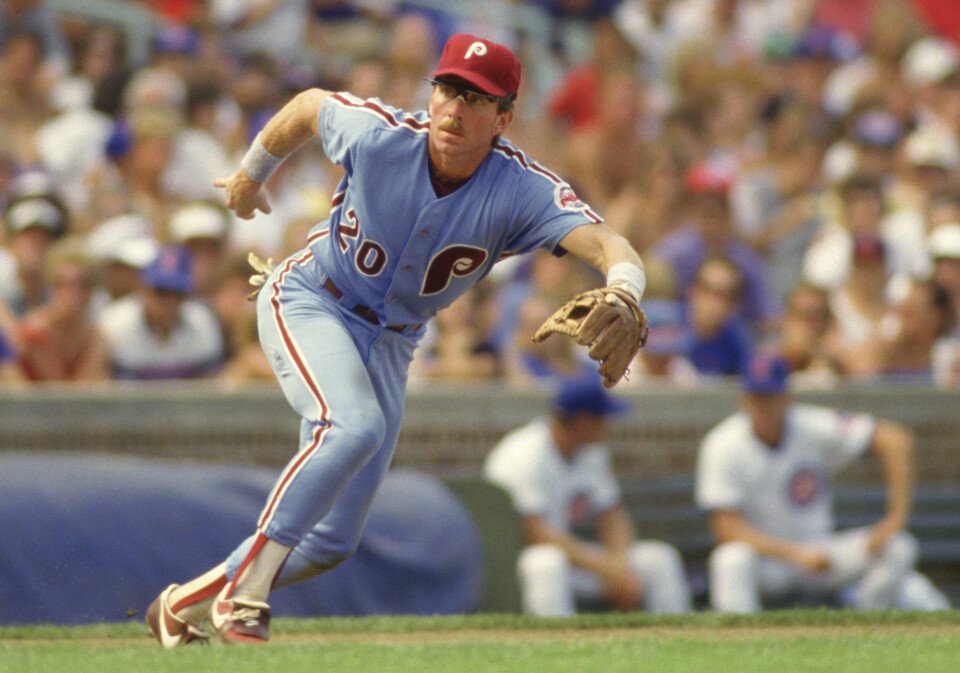
Photograph via Getty Images
Mike Schmidt
Baseball
All the Hall of Fame third baseman did was go out there at the Vet and do his job, day after day, night after night, with no flamboyance whatsoever as he racked up records and stats. When he broke into the league in 1973, he hit just .196; the following year, he made the All-Star team — his first of a dozen selections. He led the league in homers in eight different seasons, joined the elite 500-homer club in 1987, and finished his career with 548. Along the way, he also led the league in walks (four times), assists (seven times), and double plays (six times); won 10 Golden Gloves and six Silver Sluggers; was National League MVP in 1980, 1981, and 1986; and was MVP in the Phillies’ first-ever World Series win, in 1980. And he did it all without a single smidge of AI’s swagger or Barkley’s braggadocio or John Kruk’s, well, Kruk-iness — just the calm, self-assured aplomb of a man with a job to do. Which, when you think about it, is actually how most of us approach our lives here in Philadelphia. — S.H.
10
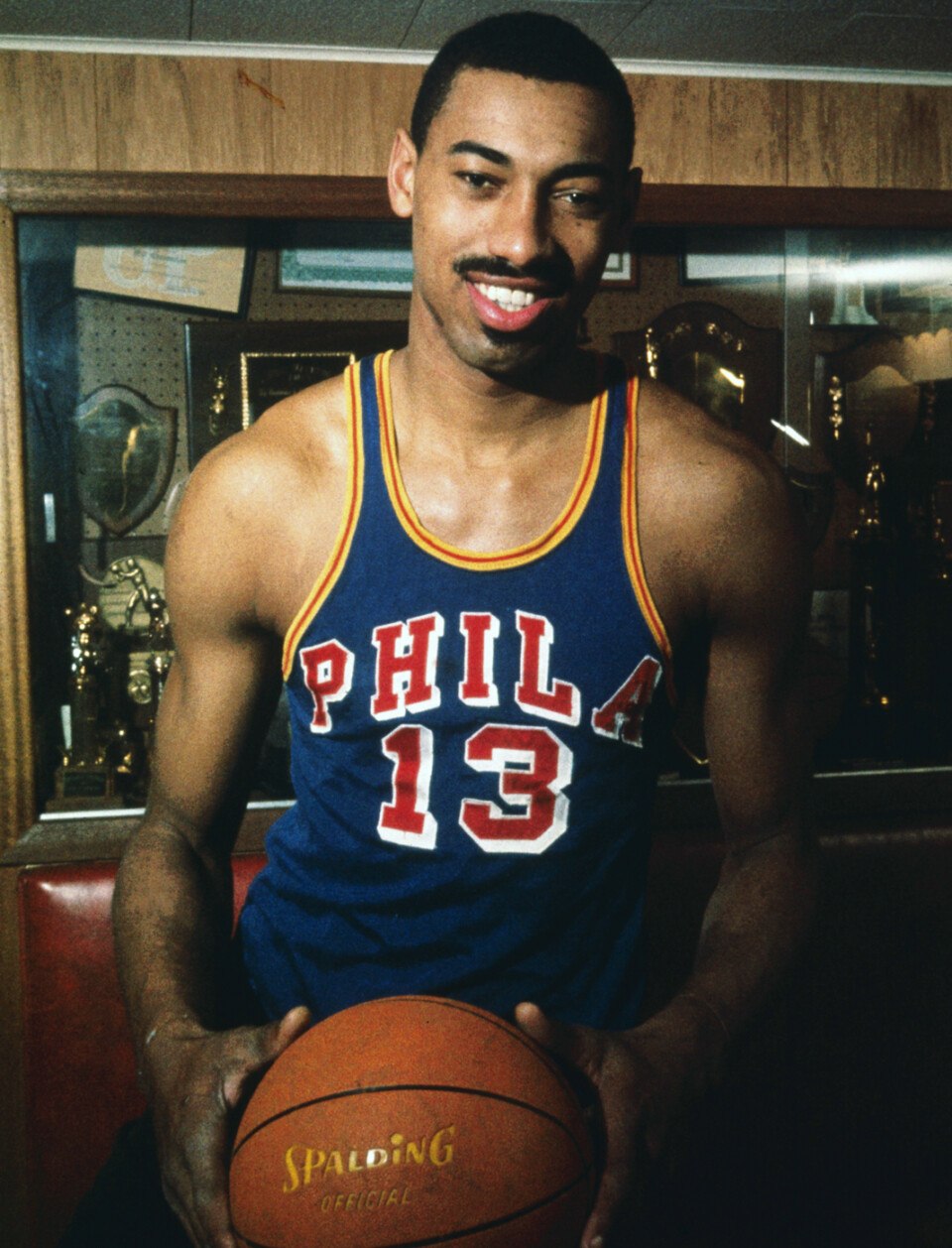
Photograph via Getty Images
Wilt Chamberlain
Basketball
He was a true native son — born and raised in West Philly, he hit six feet tall by age 10 and went to Overbrook High, then on to the University of Kansas, where he stretched to his full height of seven-foot-one. His list of career bests is nigh unbelievable: He holds 72 NBA records, ranging from most points per game in a season (50.4 in 1961–62; the next three spots are also his) to most points scored by a rookie in his first game (43, in 1959) to most consecutive 50-point games (seven, 1961) to … hell, look it up; there’s only so much space. As powerful as his legacy are the myths: the 100-point game in Hershey with no video evidence, the son he may or may not have had, the trouble foul shots gave him, the 20,000 women he claimed to have bedded. And all from a guy whose rookie contract was for $30K! (Granted, that made him the league’s best-paid player.) Okay, look: They had to change the league rules to try to rein him in. He played 14 NBA seasons (for the Warriors of Philly and San Francisco, then for the Sixers and the Lakers), and after all that, he took up volleyball. Guess what? He was good! — S.H.
9
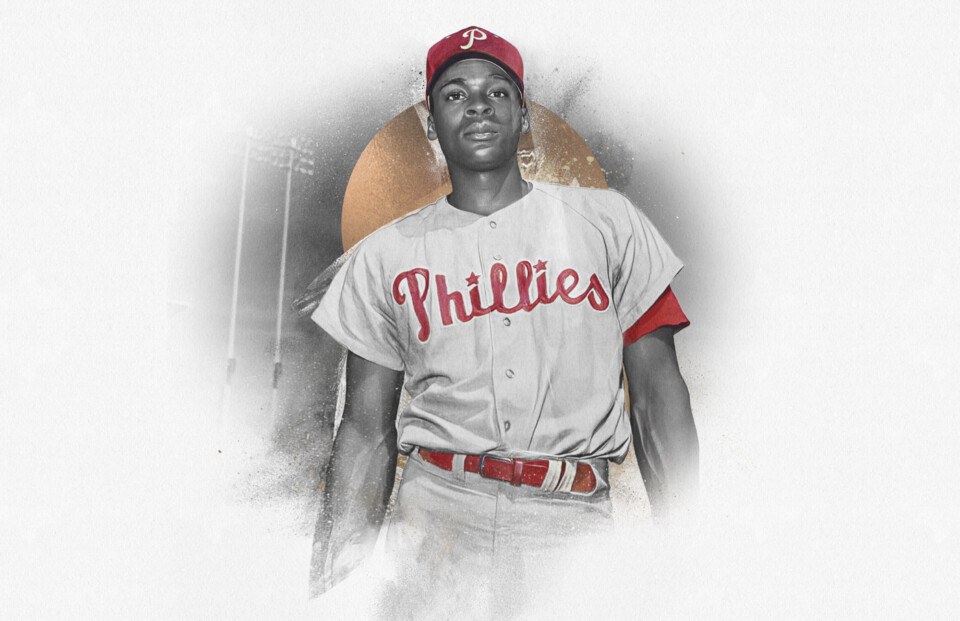
Photo-illustration by Neil Jamieson; photograph by Bettmann/Getty Images
Dick Allen
Baseball
Only a handful of players in the history of the game have prompted the greats to speak in hushed tones about the sound their bats made. Often, it’s a piercing thwack. But when Allen swung his massive 42-ounce bat, according to catcher Tim McCarver, “it made a whistling sound.” The great Willie Mays said he’d never seen anyone hit the ball harder. Indeed, Dick Allen destroyed baseballs. That fact alone should have endeared the Phillies star to the city. That he moonlighted as a nightclub crooner (fronting Rich Allen and the Ebonistics) should have made him a god, a proto–Jason Kelce. But Allen’s relationship with Philadelphia was fraught, a mirror on the strife that gripped the city, and indeed the nation, in the midst of the Civil Rights Movement.
A prodigy from a small town in Western Pennsylvania, Allen was a revelation. In 1964, he posted one of the finest Rookie of the Year campaigns ever, clobbering 81 extra-base hits and scoring 125 runs; according to stats nerds, he was worth a jaw-dropping nine wins all by himself. Of course, ’64 is remembered less for Allen’s mashing than for the Phils’ epic late-season collapse. It was, perhaps, a portentous debut. Allen was the first Black superstar for the final National League team to integrate. In a city crackling with racial animus in the mid-1960s, tensions between Allen and the fans, the media, and his own teammates maintained a rolling boil.
More than a ballplayer, Allen, portending the likes of Charles Barkley and Allen Iverson, became something of a walking Rorschach test for Philadelphians. As his offensive exploits grew, Allen became a hero to many but also a target of ire from racists in the stands. Not inclined to sit idly by as slurs and worse were hurled at him (one of his most Philly qualities), he spoke his mind and then wore a helmet in the field to protect himself from projectiles — coins, batteries, etc. During the 1969 season, Allen began chirping back via messages etched in the infield dirt, including “Boo,” “Why,” and “Oct. 2” — the season’s final day, after which he prayed he’d be traded anywhere else.
Allen got his trade, to the St. Louis Cardinals, for Curt Flood, another Black star who had no desire to endure what Allen did here. Flood successfully challenged baseball’s “reserve clause,” ushering in the free agency era and forever changing sports. All triggered by Allen’s refusal to swallow the racism flung at him in this city.
Unsurprisingly, Allen had some of his finest seasons after leaving this crucible. But it’s not a truly Philly story without a redemption arc. In 1975, after he retired following a contentious divorce from the White Sox, the Phillies coaxed him home, where he and the city exorcised some demons together. This go-around, he received rousing ovations and, in a bit of karma, spent two of his waning playing years tutoring the players who’d eventually win the 1980 World Series. It’s both tragic and predictable that Allen died just a few years before an impassioned, decades-long Hall of Fame campaign waged by his supporters finally prevailed. — Brian Howard
8
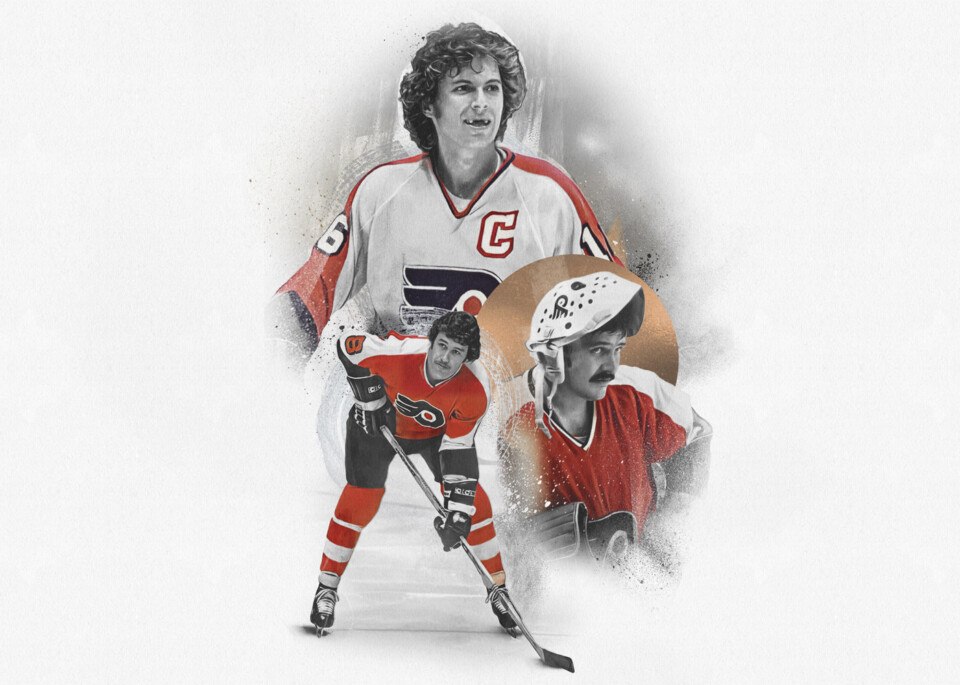
Photo-illustration by Neil Jamieson; photograph via Getty Images
Bobby Clarke and the Broad Street Bullies
Hockey
This whole list would be worthless without Bobby Clarke, the toothless, grinning captain who played 1,144 games in the orange and black and defined for a generation what Philly grit looks like. But …. do you want to be the one to tell Dave “The Hammer” Schultz, Bob “Hound” Kelly, or Andre “Moose” Dupont we left them off? Or #1 in goal (and in our hearts), Bernie Parent?
While, yes, Clarke is the face of the franchise, there’s just no singling out any one player from the Philadelphia Flyers teams that gave this city two straight Stanley Cups. The whole was truly greater than the sum of its parts. Win today, and we walk together forever, head coach Fred Shero famously scrawled on a whiteboard in the locker room before Game 6 of the 1974 final. And so they did, and have.
Even if you aren’t old enough to remember Rick MacLeish’s winner in that game against the Boston Bruins, or a single one of Schultz’s 472 penalty minutes during the repeat campaign, you’ve heard the stories, watched the highlights, seen the banners hanging, know the names. And what a bunch of names, even just phonetically (Orest Kindrachuk! Ed Van Impe! Gary Dornhoefer!).
We’ve had better teams and more beloved champions, but none has ever been more Philly, nor meant more to the city in its era. The Broad Street Bullies made Philadelphia a hockey town. They were Rocky before Rocky. And they won. That first run to the Stanley Cup came at a time when the Phillies, the Eagles, and the Sixers were all last-place teams (and the 9–73 Sixers the worst team in NBA history). The Flyers set the standard for championship parades, both in exuberance and in crowd size. Schultz even beat A Philly Special Christmas by four decades, cutting a seven-inch single, “The Penalty Box,” with lyricist Kal Penn (Chubby Checker’s “Let’s Twist Again”) and MFSB/Sigma Sound great Vince Montana.
Rodney Dangerfield may not have been in Philadelphia when he “went to the fights and a hockey game broke out,” but that joke does not exist without the Broad Street Bullies. The team was its own larger-than-life orange and black mascot: ornery, hulking, porn-stached, and, above all, loathed by hockey purists. “These bullies would bloody the face of the National Hockey League,” narrator Liev Schreiber says in HBO’s 2010 doc about the team, while New York Times sports columnist Dave Anderson once called the Spectrum a “cradle of licensed muggings.”
To put it another way: No one liked them, and they definitely didn’t care. Keep reading …
7
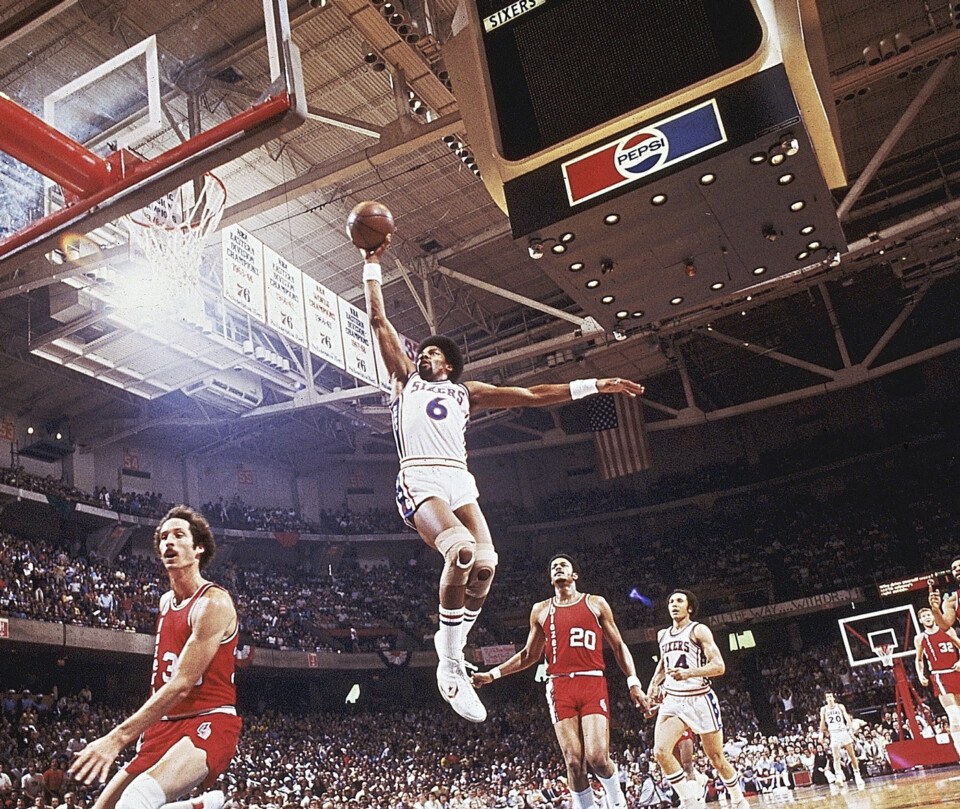
Photograph by James Drake/Sports Illustrated/Getty Images
Julius Erving
Basketball
It still defies physics. The ball cradled in his right hand. The transitional vault into orbit. The slam turning the Spectrum into a madhouse. A few months before leading the 76ers to his first and only NBA title, Julius Erving threw down one of the most iconic dunks of all time in the most gentle way possible: rocking the baby against Lakers defensive specialist Michael Cooper and turning a two-point punctuation into an art form. It’s no wonder his autobiography begins with “Rise. I jump.” Throughout his 11-year NBA career, Dr. J reflected his surgical sobriquet with that unique blend of precision and power, hovering over the hardwood and gliding through defenders with acrobatic feats that induced doubt about Earth’s gravitational pull.
After developing his touch at Rucker Park, he learned wizardry in the ABA, then chased the Philadelphia record books: He ranks all-time fourth in points (18,364) and assists (3,224), seventh in rebounds (5,601), third in steals (1,508), and first in blocks (1,293). But it wasn’t until 1983 that Erving solidified his Philly stature with clutch heroics, helping the Sixers sweep the Lakers and earn the city a long-awaited trophy. Beneath his unparalleled skills and league-wide influence was a dedicated, hardworking, community-focused foundation, an unwavering care and passion Philly could see in itself. No wonder we threw him his own retirement parade and immortalized him on Ridge Avenue. That’s what you do for the best Doc in town. — J.K.S.
6
Photograph by Harry How/Allsport/Getty Images
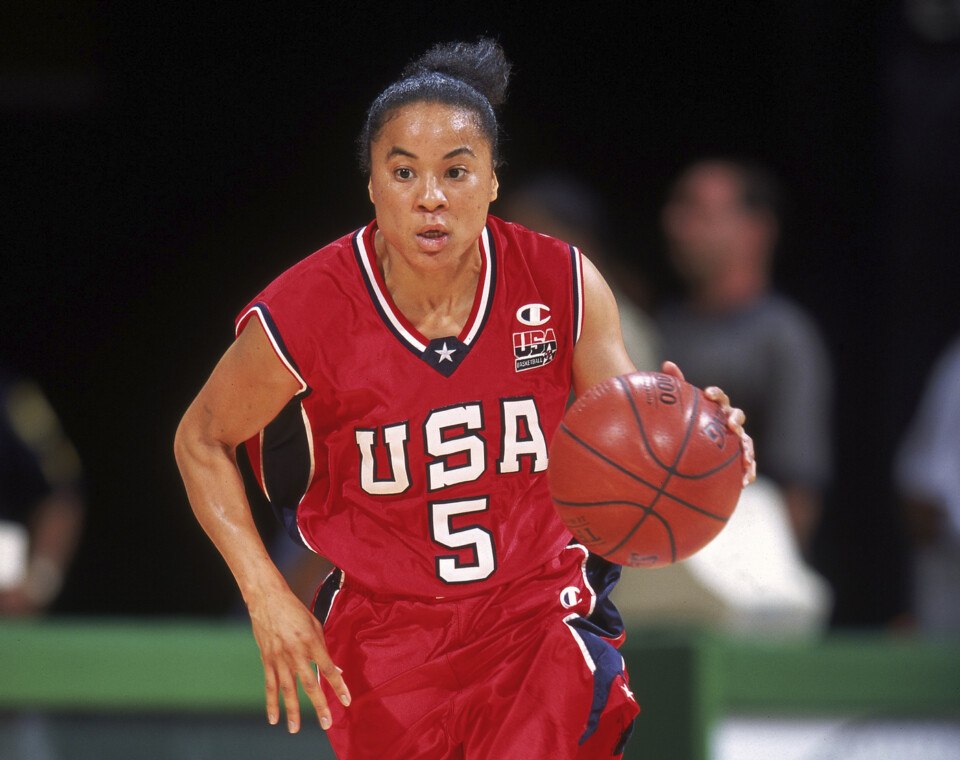
Dawn Staley
Basketball
In the mid-’80s, a legend quickly spread among ball-knowers, tales of a teenager haunting rec centers and playgrounds in North Philly, tormenting boys and grown men with her merciless crossover. Despite a five-foot-four-inch frame, she could get to the rack, splash a jumper in your face, or hound you as a spunky defender.
Seeing was believing when it came to Dawn Staley. As a middle schooler she caught the eye of Temple men’s coach John Chaney, who barked at an assistant to go find him a player like Staley, someone “born to lead.” Staley won three consecutive public school championships at Dobbins Tech, en route to being named the National High School Player of the Year in 1988.
Throughout her time playing in three Final Fours at the University of Virginia, and then in the early WNBA, Staley wore Philly on her sleeve: “The city has a certain pulse about it. It’s real. It’s authentic. It’s genuine. I’m not saying that it’s always positive, but you know what you’re getting, and that’s appealing. We don’t have layers to us. We are who we are.”
It’s borderline disrespectful to glaze over Staley’s coaching career, which ranks among the greatest of all time in the sport (at only 55 years old!) — a résumé that includes three NCAA titles, an Olympic gold medal, and a status as maybe the most recognizable icon in the women’s game outside of Caitlin Clark — but that’s just how GOATed Staley is in this city as a player. — Malcolm Burnley
5
Photograph by Drew Hallowell/Getty Images
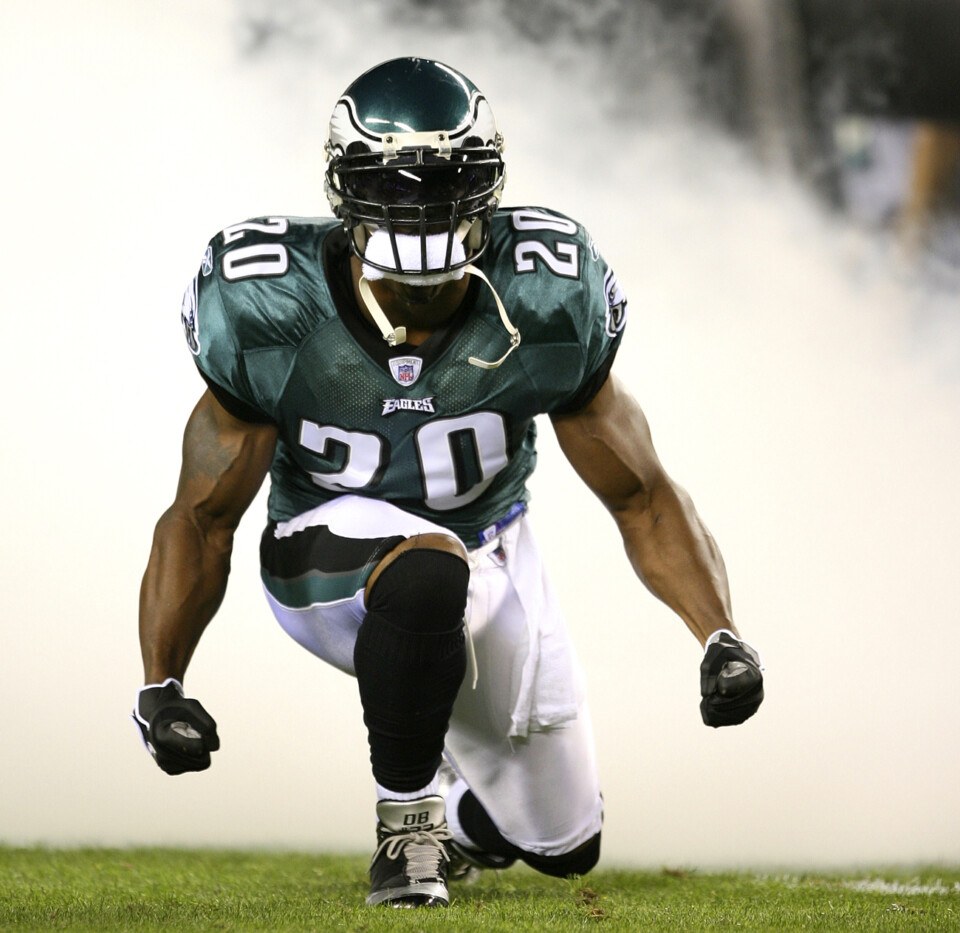
Brian Dawkins
Football
Dominating in the game of football — and doing so on defense, in Philadelphia — requires summoning something forbidden in civilized society, something primal. The superhuman feats of violence unleashed by Brian Dawkins would, had they occurred off the field, likely result in multiple felony convictions. Dawkins called that side of him “Weapon X,” a nod to the berserker rage of his favorite comic book hero, Wolverine.
But before the nickname and long before the highlight reels of leaping tackles, pro-wrestling suplexes, bear-crawl entrances, and hits that bruised bodies and souls, Dawkins called the beast within “Idiot Man.” Could there be a better description for the essence of the Eagles fan?
No player before or since has checked every box that leads to sports immortality here: passion, work ethic, toughness, underdog status overcome, talent fully realized, love from the city fully requited. When a sports bar erupts, when the Linc crowd roars, when children dressed in kelly green flip middle fingers, they’re tapping into the same lunatic energy that Dawk harnessed en route to a bust in Canton. Our football team’s mascot is a majestic bird, but the Philadelphia sports fan’s spirit animal will always be Idiot Man. — Richard Rys
4
Photograph via The Sporting News/Getty Images
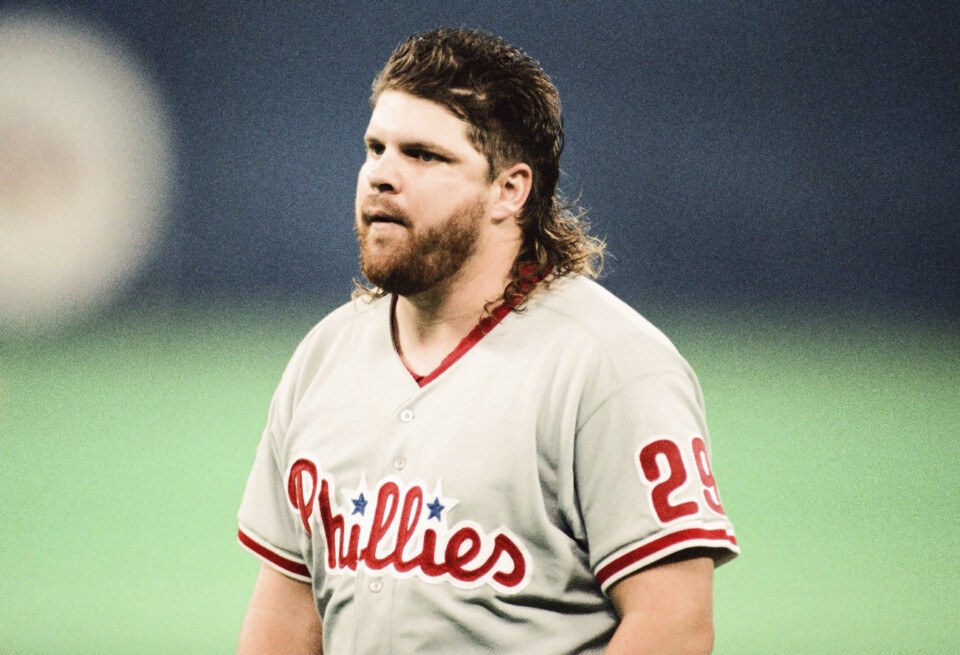
John Kruk
Baseball
The heart and soul of the Phillies these days may not be on the current roster, but in the booth. Sure, during his playing career John Kruk made three visits to the All-Star Game and became the most lovable member of the Phillies’ “Macho Row” during the team’s unsuccessful 1993 World Series. He was portly with an unkempt mullet, he indulged in a healthy dose of beer and cigarettes, and he still played one hell of a game. In Kruk, Philadelphians could see their uncles, or maybe themselves.
But what makes Kruk such a Philly legend isn’t his athletic prowess; it’s his gift of gab. He showed off his wry sensibilities on Letterman; in the Phillies locker room, he rejected the title of “athlete” and opted for “baseball player,” because, well, look at him. He pranked then-rookie Chase Utley after Utley’s first major-league hit, and was even parodied on Saturday Night Live.
Since 2017, Kruk has been an enigmatic force on the Phillies broadcast team alongside his affable play-by-play partner, Tom McCarthy, effectively transforming Phillies games into your favorite comedy podcast. A cancer survivor, Kruk will take a lull in a game as an opportunity to remind you to get a colonoscopy. He’ll bemoan high-tech technology like light switches or emails. He’ll fill you in on a new fact he learned at the Franklin Institute: Did you know ripping someone’s ear off takes the same force as opening a pickle jar? He’ll ask the important questions: Why is the ocean water in Miami so placid? Why aren’t babies born with chest hair? All of this musing takes place during the baseball game. He’s a fan first and a broadcaster second, getting salty when the Phils are losing and beaming when they’ve got their act together.
With Kruk in the booth, it feels like you’re watching the game with an old pal at a bar in Grays Ferry. While he hails from West Virginia, it would be easy to mistake Kruk for a local. He’s an everyman, a straight shooter with a blue-collar disposition, and, most important, a true Philadelphia archetype with a commitment to being a lovable weirdo with little regard to how the outside world perceives him. — Olivia Kram
3
Photograph by Andy Lewis/Icon Sportswire/Getty Images
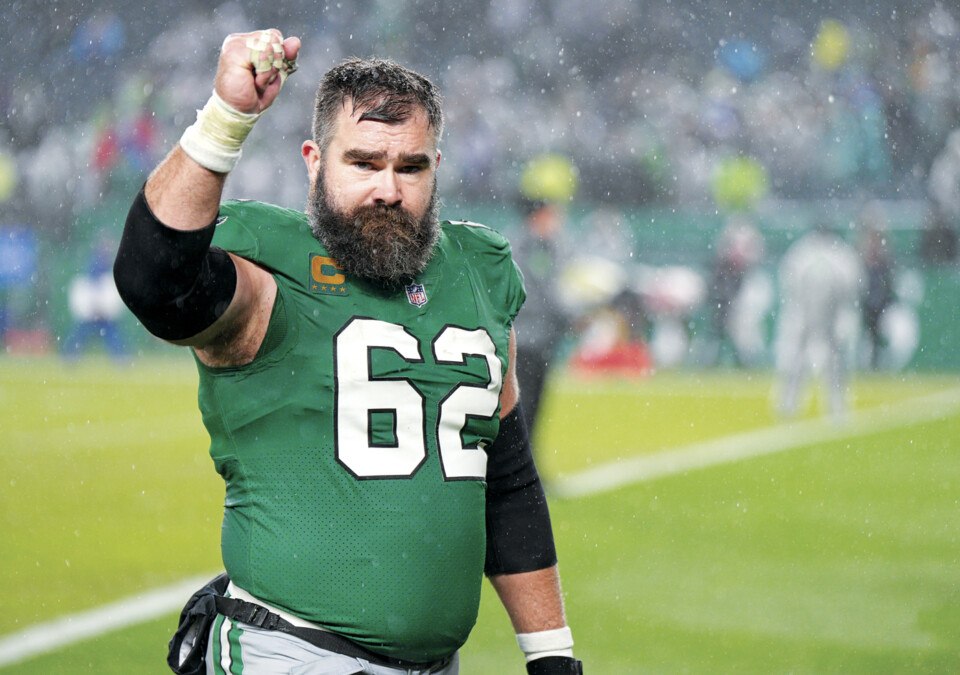
Jason Kelce
Football
Like soft pretzels, the Roots, and electricity, Jason Kelce is our gift to the world. Tailgate crowds from Green Bay to Buffalo, podcast listeners, passionate pop-star fan bases — all have fallen under the spell of his everyman charm.
But the moment that cemented the future Hall of Fame center as an all-time local icon didn’t suggest his eventual mass appeal. As the Eagles’ first championship parade reached its climax on a cold Thursday in February 2018, Kelce took the microphone on the steps of the Art Museum and delivered the greatest oration in the city’s history. Sure, guys named Lincoln and Kennedy also spoke here. But did either of them wear an electric green Mummers costume? The bearded, beer-fueled bard kept teammates in hysterics, fans hanging on every word, and local network censors busy trying to bleep f-bombs. He called out the doubts of the haters — “Jason Kelce’s too small! Lane Johnson can’t lay off the juice!” He yelled himself hoarse. He defined the underdog identity of the team (“Hungry dogs run faster!”) and the city itself without once mentioning a fictional boxer. He shout-sang the now-famous “No one likes us, we don’t care” chant. Passionate? Spicy? Unhinged? Philadelphian? Check, check, check, and fuckin’ check. — R.R.
2
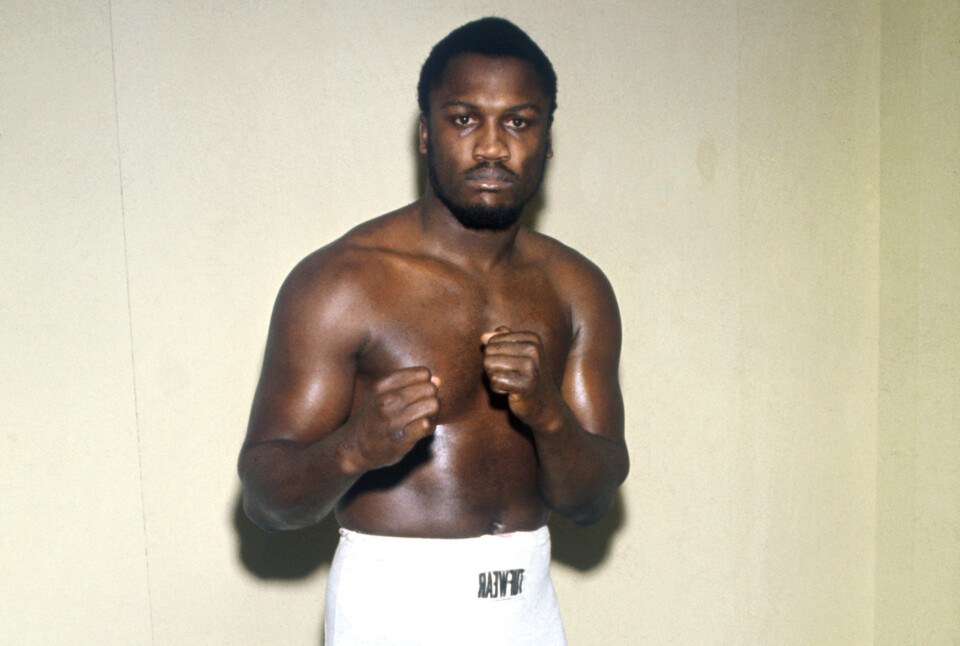
Photograph via Bettmann/Getty Images
Joe Frazier
Boxing
Here’s something everyone should know: Before he was a full-time boxer, Joe Frazier worked at Cross Bros. Meat Packers, a slaughterhouse in Kensington, where carcasses on meat hooks became his punching bags. As another part of his training, he sprinted up the Art Museum steps.
What, you thought Stallone came up with all that on his own?
Frazier was the consummate Philly athlete in the 1960s and ’70s, though he came from South Carolina, climbing alone aboard a Greyhound bus at the age of 15 and never looking back. Once he got here, he stayed; Smokin’ Joe lived and died in the city. He had press conferences at Bookbinder’s and filled the Spectrum. He became a civic investment when, after he won gold in the 1964 Olympics, prominent Philadelphia businessmen created a syndicate to pay him $100 a week, get him a North Broad Street gym, and take 50 percent of his earnings (how generous!). Most famously, uncomplicated Frazier was a foil to his flashy rival, Muhammad Ali. Outspoken Ali was a darling of elites and progressives during a turbulent era, and he portrayed Frazier cruelly as an uncultured Uncle Tom. Frazier just kept it real, though, repping Philly with a workmanlike relentlessness and devastating left hook, with which he floored Ali to win their 1971 heavyweight superfight. — D.S.
1
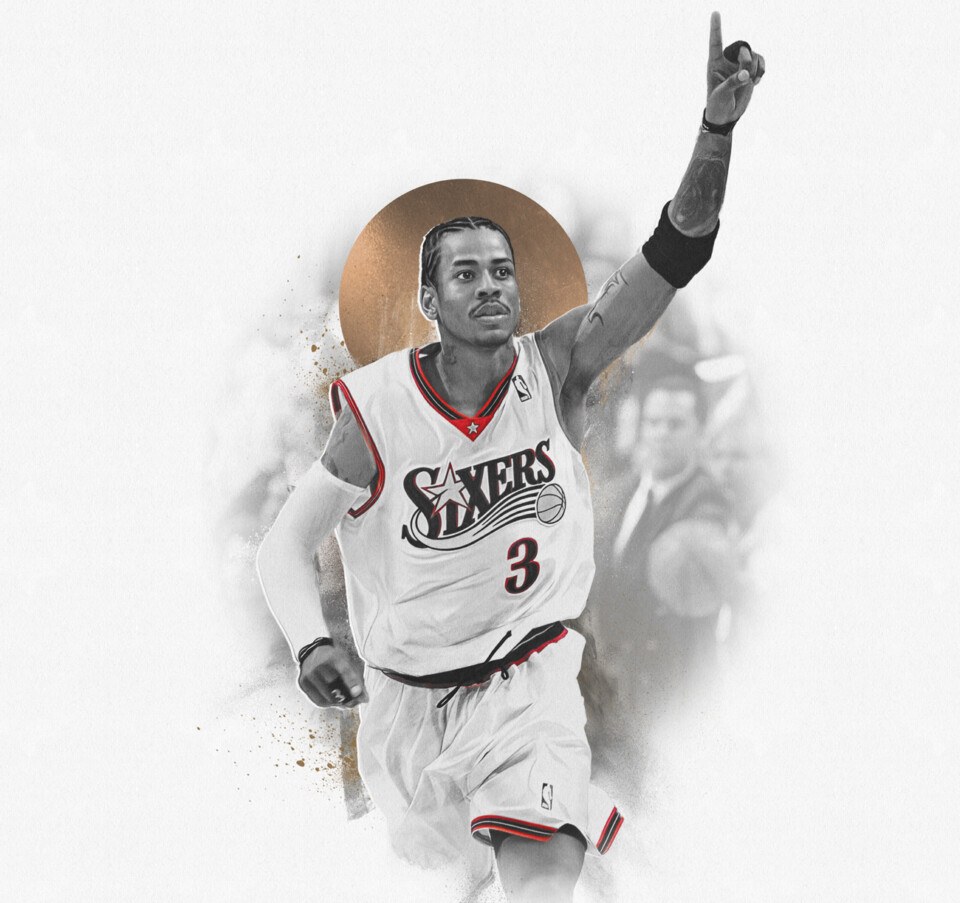
Photo-illustration by Neil Jamieson; photograph via The Sporting News/Getty Images
Allen Iverson
Basketball
Thug. Drug dealer. Ex-con. That’s what you heard, nearly three decades ago. Columnists and sports-talk yakkers let it be known that a bad actor had hijacked center stage in Philly, what with his stint in jail at all of 17 and those scowling, hooded friends — his “posse,” remember? Never mind that the prison sentence would later be overturned; Allen Iverson might as well have been from another planet, not just Newport “Bad” News, when the storied Sixers franchise was handed to the 21-year-old prodigy in 1996.
In Newport News he’d been cared for by drug dealers, abandoned by his biological father, raised by another man who was in and out of prison for dealing crack. He’d seen his first murder before his eighth birthday; one summer, eight friends were felled by gunshot wounds. How would this Biggie Smalls rap lyric come to life fare in Philly, where Dr. J’s Philly Sound crossover-era moves had spawned the unthreatening commercialism of Michael Jordan, whose league Iverson would upend?
We know now what followed: the scoring titles, the MVP trophy, the perpetual psychodrama with his old-school coach, Larry Brown, whom Iverson, denied his freedom at a young age, saw as a threat to it on the court. Not to mention the infamous “We talkin’ ’bout practice” rant after the premature close to his 2002 season, during which he’d won another scoring title at 31.4 points per game. All of it — Iverson as rebuke to the Jordan era — became the stuff of hoops and hip-hop folklore.
Iverson would go on to become the game’s greatest small player ever, a blur on the court, the progenitor of the most lethal weapon in the game. He did for the crossover dribble what the Doctor had done for the dunk in the ’70s: turn it into a weapon of intimidation.
The team listed him at six feet, but it was more like five-10. Yet there he was, catapulting himself at behemoths like Shaq and then turning to his co-conspirators in the stands and cupping hand to ear, feeding off their rabid reaction. Keep reading …
Published as “The 25 Most Philly Athletes of All Time” in the March 2026 issue of Philadelphia magazine.