
What If the Big Future of Market East Starts Starts … Small?
Forget another big-box savior. A scrappy collection of local shops, artists, and entrepreneurs is testing what Philadelphians actually want from one of downtown’s most under-used corridors.
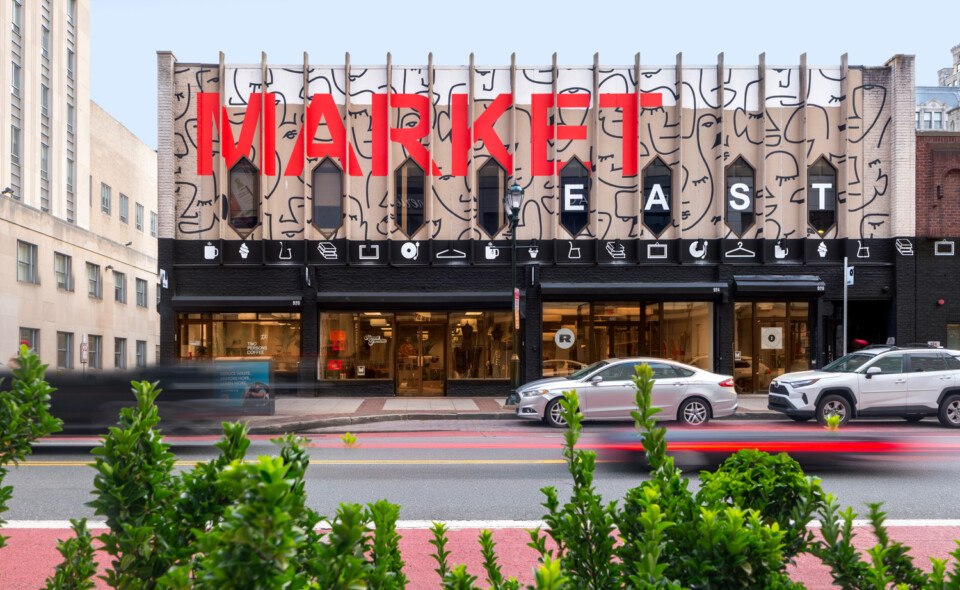
Meantime on Market / Photography by Charlie Schuck
Listen to the audio edition here:
Alexa Colas knew that the summer of 2026 was going to be amazing, what with all the Philly250 celebrations, the World Cup, MLB All Star games, and countless other gotta-be-there happenings. Hundreds of thousands of visitors would descend here to revel in the joy of this watershed moment for our city.
Colas wanted a front seat to all the action. So in May, she packed up her living room — yes, her actual living room — and moved all of her furniture and art into a vacant storefront on the 900 block of Market East. The space, called Clubfriends Radio and Records – part small business, part gathering place, part experimental art project – invited the public to browse records, dance, meet local artists and explore the history of Philadelphia’s night life. She’d done previous pop-ups as Clubfriends, but this was by far the longest — and most public.
“Bringing Philadelphia nightlife — especially underground and club culture — literally to the front and center of our city has been really important to me,” says Colas. “I was able to explicitly showcase the things that make culture possible, and Philly has always had an incredible DIY spirit.”
Colas wasn’t alone. Hers was one of six businesses selected for Meantime on Market, a nonprofit program that gave her and five other local entrepreneurs three months of free rent (from May to July) in spruced-up, vacant retail storefronts along a stretch of Market Street better known in recent years for empty windows than bustling retail. Joining her on the block were local clothing and art retailer Almost Famous, Siddiq’s Water Ice, vintage furniture shop Rarify, Two Persons Coffee, Art Philly, and Love Now Media.
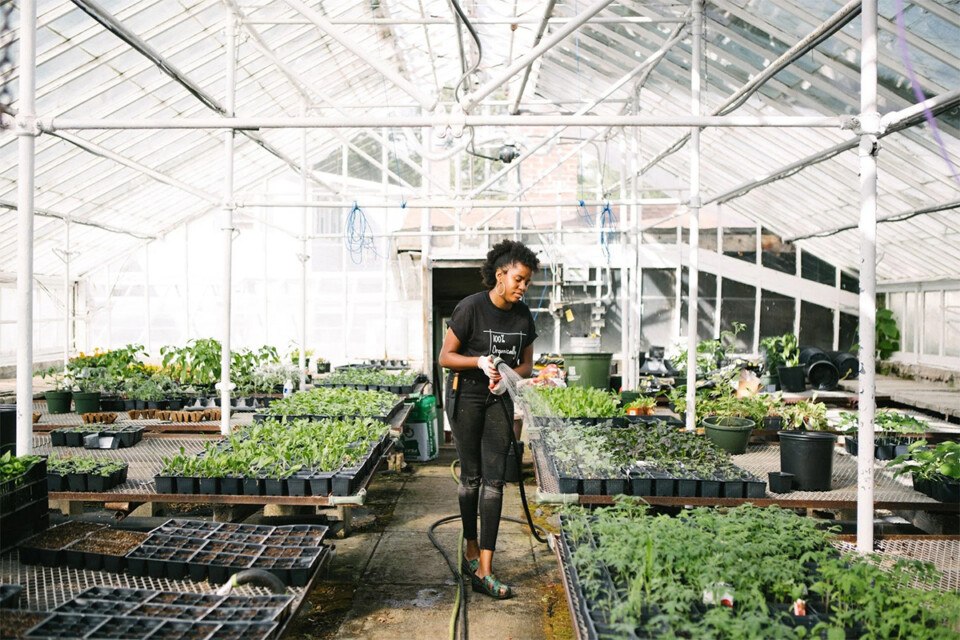
FarmerJawn joins the Meantime on Market lineup this fall.
Turns out the experiment had legs: In its first three weeks alone, Meantime on Market drew 3,300 visitors to the rough-and tumble block, generated nearly $50,000 in sales, and increased foot traffic by about 10 percent. Four of the six original businesses (Colas’s store, Almost Famous, Love Now Media, and Siddiq’s Water Ice) have since extended their stays through the end of the year. Next month, two new tenants will join them: CornerJawn, a pop-up grocery and local food market from urban horticulturist and agricultural educator Christa Barfield (who runs the popular FarmerJawn farm, greenhouses and produce market), and the artist collective Members Work, made up of folks who met at NextFab, which will host a 90-day exhibition, “Past Lives, Surfaced by Skilled Hands,” in partnership with Circular Philadelphia that features art made form reclaimed and repurposed materials.
All of this is making Meantime on Market something far more intriguing than a quirky one-and-done project: it has become a kind of small-scale laboratory for the future of Market East. At the very moment city officials, developers and Philadelphians are debating how to restore one of Center City’s most stubbornly troubled corridors, Meantime on Market is testing an idea in real time: What happens if, instead of waiting for another big-box retailer or massive redevelopment project, you hand empty storefronts to local entrepreneurs and artists and see what resonates with the public? And not just on Market East, but elsewhere in the city?
Meantime on Market is the latest experiment hosted by Meantime, a nascent nonprofit that connects creative entrepreneurs who have ideas with building owners who have vacant storefronts – with Meantime handling the pesky logistics of bringing the match to life. Founded in 2024, Meantime is the brainchild of Brian Phillips, founding principal of the South Kensington architecture firm Interface Studio architects (ISA), who had become dismayed, post-pandemic, to see COVID’s pillaging effect on small businesses, many of which struggled to stay open amidst stay-at-home orders and decreased foot traffic. Phillips saw a lot of empty storefronts.
He started asking landlords with vacancies if ISA could host pop-ups in their spaces, and that’s how Meantime was born. After a handful of successful small projects (like one-day markets at the vacant Leader Theatre in West Philly and the former Blumenthal Chocolate Factory in Bridesburg), Meantime teamed up with the Center City District and the city to open Meantime on Market, its largest activation to date.
“Creative entrepreneurs having access to inexpensive space allows them to experiment and to be innovative,” Phillips says. “We’re now thinking: how else can Meantime spaces create unexpected, amazing moments?”
Meantime on Market came with a lot of baggage. Many of the buildings between 9th and 10th streets are owned by a Comcast-Harris Blitzer Sports Entertainment (HBSE) real-estate partnership, and a lot of Philadelphians had protested the latter’s plans to build a new Sixers arena in the neighborhood. Skeptics of the Meantime project, when it was proposed, said those in power were interested only in using it to clean up the block ahead of the summer’s tourist-heavy World Cup and 250th celebrations, not in creating something meaningful and lasting for those who actually live and work here.
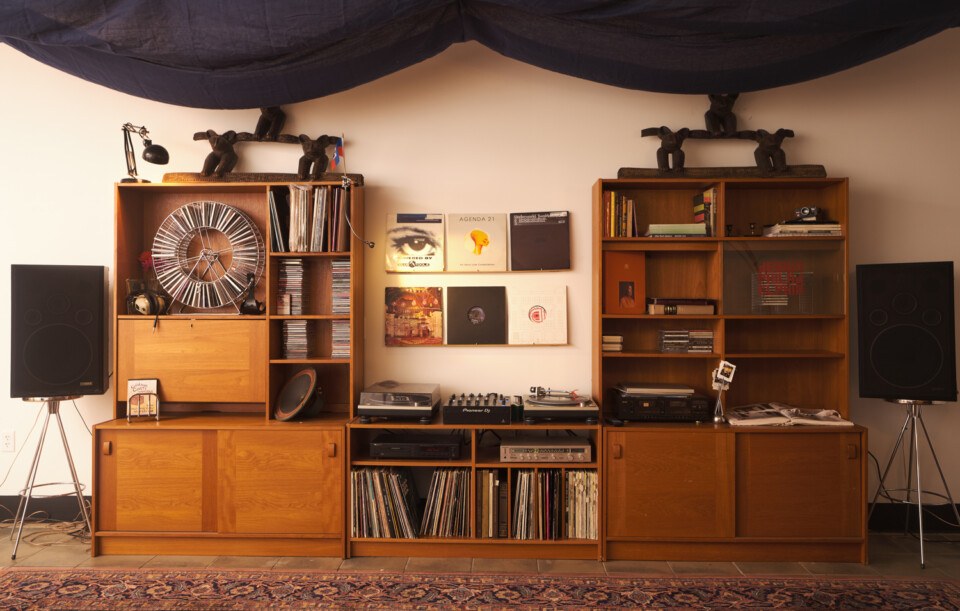
Clubfriends at Meantime on Market
But Meantime on Market is for Philadelphians, counters pop-up participant Melasia Pinder, founder of Almost Famous (whose merchandise is 90 percent Philly-made). These past months, she has watched the block become a bit of a third space for Philadelphians, especially those interested in art and culture.
“A lot of the art and design institutions in Philadelphia seem to be disappearing,” she says, like the University of the Arts. “And we have to replace them.” She adds that about 100 people wander in per day, including regular buyers who check out her revolving stock — and they don’t leave with a replica Liberty Bell or some other kitschy tourist tchotchke.
What they usually do take away is something more valuable, adds Colas of Clubfriends: connection. She herself has spent countless hours on Market chatting up the strangers who wandered into her store. She hosted DJ events, led conversations with local artists, and organized 60-plus field trips around the region. She even partnered with ArtPhilly, on the final night of the Blacktronika festival, to host a celebration and interview with legendary record producer and festival organizer King Britt. (Colas still remembers the shy Dutchman who tentatively lingered outside her storefront when Britt was in the shop. She invited him inside for the conversation, where he was welcomed by the friendly crowd.)
Meantime’s success on Market Street has thrust the tiny nonprofit arm of ISA into the spotlight, bringing an influx of inquiries from interested landlords and entrepreneurs. (This fall, for example, Fishtown’s Harriett’s Bookshop is offering a pop-up inside the Fashion District, right across the street from Meantime on Market.) Under the guidance of Meantime’s new deputy director Zoe Evans-Dunn, the nonprofit is transitioning to an incubator model where entrepreneurs occupy vacant storefronts rent-free for the first three months, with the option to extend to six under a profit-sharing model, paying a portion of profits (a minimum of $1,000) to their landlords. The model gives entrepreneurs and creatives an affordable, low-stakes, environment to test ideas and perhaps grow their companies beyond a temporary activation.
Meantime will soon start fundraising, so it can host more of these kinds of activations in neighborhoods throughout Philly.
“It doesn’t have to be isolated to one block of Market Street,” says Evans-Dunn. “We could do this in so many corridors across the city, and we’d love to, but that requires a bit of support.”
Phillips, Meantime’s founder, hopes that these activations push Philadelphians to be creative in imagining what kinds of businesses might do well on Market East. Could a small, local grocer like CornerJawn be a viable response to the gap created by the recent closure of Giant, at 8th and Market? Well, we’ll get to try it out this fall. Do Philadelphians want more art and event spaces downtown? The City of Philadelphia — and building owners Comcast and HBSE — can look at data from Clubfriends’ events or the new Members Work exhibition to see if something like that could work long-term.
It’s not like Philadelphians are short on ideas for how to improve Market East. Last November, Mayor Cherelle Parker created the Market East Advisory Group, with more than 60 members. And this past summer, the City Planning Commission hosted the MY Market East engagement hub on Meantime’s block, where Philadelphians shared their visions for the future of the street.
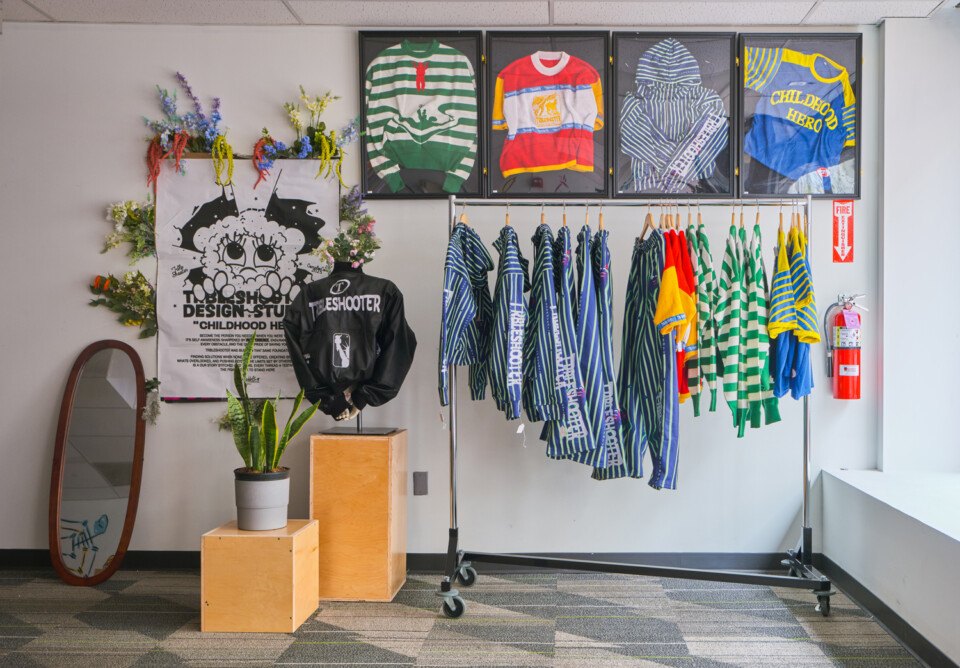
Almost Famous at Meantime on Market
“We felt that the next chapter for the corridor needed to be uniquely Philly, and we heard that sentiment echoed over and over as we engaged with folks,” says Octavia Howell, planning commission director with The City of Philadelphia.
Answers ranged from more luxury shopping options to more spaces for sidewalk cafes to a local business hub, similar to what Meantime offers now. Others asked for the City to build out pocket parks, plant trees and increase public seating. The City received 1,019 responses to the ranking exercises they had in the engagement hub and 585 responses to the survey. The City is analyzing the results and plans to release a report by the end of the year with short, medium, and long-term plans for the corridor.
Change can’t come soon enough. True, the corridor no longer feels derelict — Meantime’s lively entrepreneurs have made sure of that — but the project still has an air of impermanence, what with shadows of old retail signs on vacant storefronts further up the street (Siddiq’s Water Ice for example, is sandwiched between those of a Popeye’s and we-buy-gold jeweler).
But for now, there’s scrappy, energetic Meantime on Market and the tantalizing future it hints could be possible for this once thriving stretch of the downtown. Phillips says his team is happy to program the space into 2027 if need be, creating more opportunities for Philadelphia artists and entrepreneurs to test their ideas in front of an international audience.
“It’s easy to see Meantime as a pop-up, as a temporary event, as a one-off that took advantage of an admittedly very specific, complicated context,” Phillips says. “But I think it’s a real expression of the spirit of Philly entrepreneurs and creatives.”