Philadelphia’s Next Great Era Begins Now
Why this chapter of our city’s story might be our best since, well, 1776
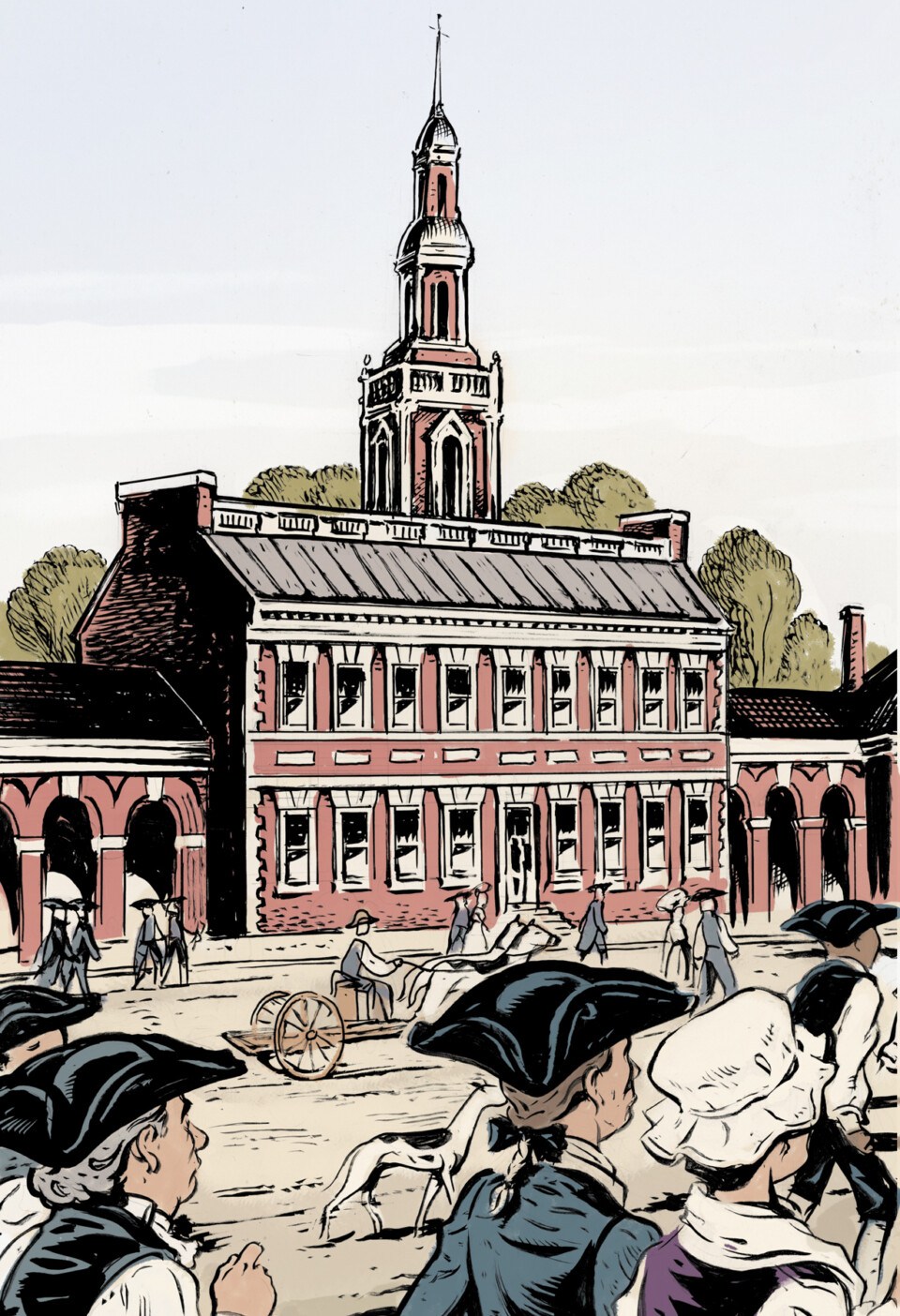
The next chapter of Philly might be our best since 1776. / Illustrations by Lars Leetaru
Listen to the audio edition here:
It is, I have to tell you, the most bitterly cold Independence Day I’ve ever been part of. Then again, it’s not the 4th of July; it’s the 27th of February — aka Dominican Independence Day. I’m standing on the north (that is, shady) side of City Hall around noontime, amidst a hundred or so happy if chilly Philadelphians who’ve come to celebrate the 182nd anniversary of the Dominican Republic’s liberating itself from Haiti.
Shaira Arias, a reporter for NBC10 and Telemundo62, is the emcee for this event, and as she speaks to the crowd, many of whom are clutching small Dominican flags, she switches seamlessly between English and Spanish. The same holds true for most of the dignitaries Arias introduces over the course of 30 minutes, from leaders of the cultural organization Dominicanos del Delaware Valley to City Councilmember Quetcy Lozada to Office of Immigrant Affairs director Charlie Elison (who proudly notes that his wife, a surgical oncologist, came to the U.S. from the Dominican Republic when she was in elementary school).
One hundred and seventy-five years ago, it was migrants from Northern Europe who were transforming Philadelphia. One hundred and twenty-five years ago, it was migrants from Southern Europe. Today, among the people pushing Philadelphia forward are the Dominicans. Over the past 20 years, and particularly the past 10, the city has seen a significant influx of migrants from the small Caribbean country, and they’re increasingly making their presence, and their value, felt — economically, culturally, and civically.
It’s a point that State Representative Danilo Burgos, who represents the heavily Latino 197th District in North Philadelphia, emphasizes when it’s his turn to speak. The first Dominican American ever elected to Pennsylvania’s General Assembly, Burgos talks about the revitalizing impact the Dominican community, known for its strong entrepreneurial spirit, is having not just in Philadelphia, but in other cities around the commonwealth, including Hazleton, Allentown, and Erie. (Recent estimates suggest that more than 160,000 Dominican immigrants now call Pennsylvania home.)
“Our country needs us,” Burgos says. “If the great United States of America is to survive another 250 years, it will be because of people like us, people that believe in empathy, people that believe in community … people that believe in the real American dream.” His message is met with a big cheer and a robust round of applause.
Speaking of Americans and dreams and Philadelphia, it was — perhaps you’ve heard? — 250 years ago this summer that the United States of America was founded right here in our city, at the time the largest and most important one in the new country. A hundred years after that, at America’s centennial, Philadelphia had fallen to second in population, but we were a growing, dynamic place nonetheless. A century after that? Well, by the time of America’s bicentennial, Philly was unquestionably a metropolis in decline — a city hemorrhaging people, jobs, confidence, and hope.
All of which raises a question: Where does Philadelphia stand now, as America turns 250? What’s our story in 2026? If we’d posed that query a decade ago, the answer would have been pretty straightforward. After the dark period of the 1970s and ’80s, Philadelphia was once again a city with momentum, building new buildings, attracting new residents, generating national buzz.
Alas, COVID seemed to bring an abrupt halt to all those good feels, which is why, for at least the past year or so, I’ve found myself struggling to figure out what the broader narrative is about Philadelphia. Moving forward again? Sliding backward? Stuck in place? It’s been hard to grasp. Yes, Center City is in better shape than it was during the depths of the pandemic, but commercial vacancy rates remain high, and our downtown still doesn’t feel as vital as it did in the late teens. True, we no longer hold the ugly title of “poorest big city in America” — Houston is now poorer — but one in five Philadelphians still lives in poverty, and the Trump administration’s safety-net broadsides will only make things more challenging. Even the Semiquincentennial is a mixed bag. There’s a lot going on here — the PGA Championship, the World Cup, the MLB All-Star Game — but it doesn’t quite feel like the eyes of a grateful nation are upon us.
And yet, after having spent a chunk of the past couple of months talking to Philadelphians about their city and trying to see it myself with fresh eyes, I’m feeling not only optimistic about Philadelphia, but convinced we’re on the verge of a late ’20s surge — a bold new era that has ties to our past but anticipates America’s future.
One reason for my newfound sunniness is the sheer amount of stuff that has just opened, is under construction, or looms on the horizon — much of it, in contrast to the first 20 years of the 21st century, taking place outside Center City.
But just as important is this: Philadelphia seems to be standing in opposition to the political and cultural forces of the moment, which, while fraught, is a very, very good thing. For instance, at a time when immigration is under attack and immigrants are feeling terrorized, people who’ve come here from other countries — like, say, the Dominican Republic — are a larger and more vital part of Philly than they’ve been in years. Indeed, the percentage of Philadelphians who are foreign-born is now 16 percent, the highest it’s been since the 1940s.
What’s more, as technology, especially AI, plays an ever-larger role in our lives, Philadelphia remains — endearingly, defiantly — a very human place, a cool, slightly scratchy vinyl record in an age of too-perfect digital streaming.
“The word I’d use is counternarrative,” says Anuj Gupta, president and CEO of the Welcoming Center, the immigrant support organization that’s played a significant role in the city’s recent immigration rise. “Philadelphia is, and should be, the counternarrative to everything else that’s going on in our nation.”
Zigging when everyone else is zagging isn’t without risk, of course. Then again, what worthwhile human endeavors are?
A week after Dominican Independence Day, I’m walking along the Delaware River Trail, just north of Spring Garden Street, in the middle of what has become one of Philly’s most interesting and dynamic areas. Though it’s 4 o’clock on a Tuesday afternoon, there is no shortage of cyclists and runners and dog walkers out here with me.
In case you haven’t been to the waterfront recently, let me tell you that what’s taking place feels pretty remarkable. For starters, there’s the trail itself. It wasn’t so long ago that taking a walk along the Delaware was a death-defying act, given all the abandoned industrial sites and high-speed traffic along Columbus Boulevard/Delaware Avenue. Today, thanks to the steady work of the Delaware River Waterfront Corporation, the nonprofit that oversees development along the river, there is a nearly four-mile-long waterfront trail, stretching from Pier 70 in South Philly all the way up to Penn Treaty Park in Fishtown, with more trail — and undoubtedly more people — coming.
“I’ve worked on the waterfront for nearly 30 years, and every time we do a connector street or trail segment, it astounds me the number of people that use it,” says Joe Forkin, DRWC’s president and CEO. “It’s like pent-up desire to be there.”
The people are eye-catching, but so are all the buildings that have been, or are in the process of being, constructed near the river. Here at Spring Garden is the just-opened Rivermark, a nine-acre waterside development featuring 450 luxury apartments and a Sprouts Farmers Market. Across the street and up a block are a phalanx of other new multistory apartment buildings — Beach Street Landing, Residences at 1 Brown, Five on Canal. A half mile north of there, back on the river side of Delaware Avenue, is the Battery, a luxury multiuse development that sits inside a hulking former power station built in the 1920s.
The feeling you have when you see all this isn’t just that there’s a lot of construction going on. It’s that a new section of the city is being born.
All of it, Forkin tells me, is proof that the vision laid out for the waterfront more than a decade ago was correct. “The overarching theory of the master plan is, if we do the public realm” — that is, build the trail on the river and create fun activations like Spruce Street Harbor Park — “the private money will follow.”
And so it has. And what’s happened so far is really just the beginning. Crews are now at work capping Interstate 95 and Columbus Boulevard between Walnut and Chestnut streets, laying the infrastructure for what will become Penn’s Landing Park, an 11.5-acre public space that will lovingly reunite Old City and the river after federal highway planners devilishly split them up 60 years ago. (The same project also includes the extension of the South Street Pedestrian Bridge, connecting South Street and the waterfront.) All of that, of course, will bring even more people, which will no doubt bring even more investment.
The development Philadelphia saw from the ’90s to the teens was mostly (though not exclusively) in the city’s core business district. What’s happening now is basically the inverse: The action is happening mostly (though not exclusively) outside the center of town.
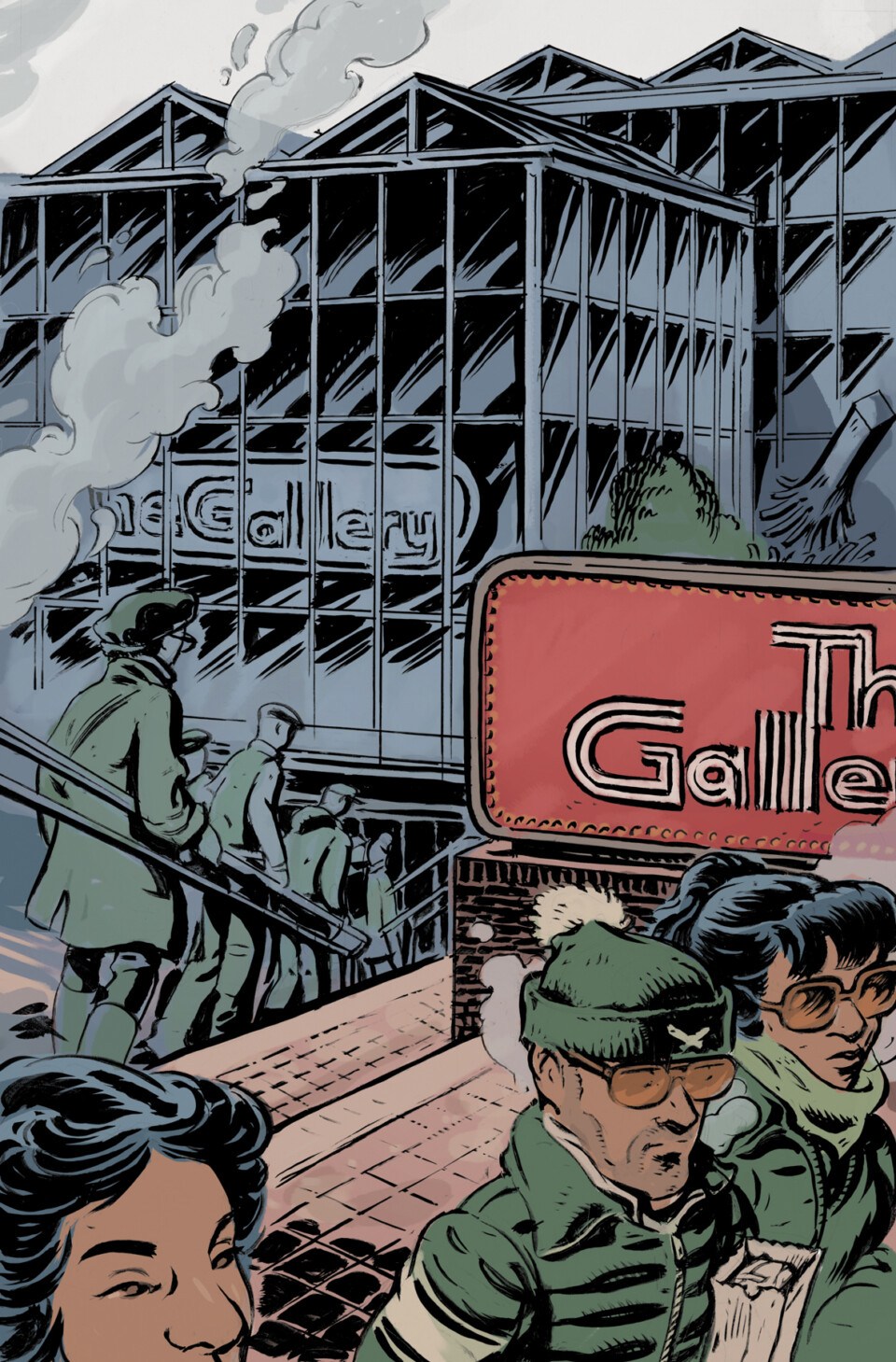
“The center of gravity has become much more dispersed,” says Diana Lind, the Philadelphia writer who pens the Substack newsletter The New Urban Order. “It’s not to say Center City is over, but it’s not where the pulse of the city is.” To illustrate her point, Lind tells me about an out-of-town friend who came to visit her recently. Fifteen years ago, Lind would have entertained her friend in Rittenhouse; on this trip they spent most of their time in Fishtown and Kensington, where the growth that kicked into gear 20 years ago seems only to have accelerated. The latest hot spot is North American Street in Kensington, which in recent years has seen the opening of several large apartment buildings, including the Luxe and the Americana, and will soon be the home of the new headquarters of the Forman Arts Initiative, a 100,000-square-foot arts campus.
But Northern Liberties, Fishtown, and Kensington are hardly the only areas with vitality, as you see if you take a tour around Philadelphia. Travel south along the waterfront, for instance, and you’ll come to the Navy Yard, where Rhoads Industries recently announced it was investing $100 million in a new manufacturing facility and Korman Communities just opened 600 residential units, the complex’s first. Meanwhile, Hanwha, the South Korean company that bought the commercial shipyard in 2024, has plans to hire up to 10,000 people over the next five years. Only a mile away from there are both FDR Park, which is in the middle of a years-long, $250 million renovation, and the sports complex, where Comcast and the Sixers will break ground next year on a $1.5 billion state-of-the-art arena. A few miles from there is the Bellwether District, the nascent innovation and high-tech manufacturing complex being built on the former PES refinery site. Among its first tenants: a Bill Gates–backed nuclear medicine company that’s spending $450 million to build a new facility.
Continue the tour north up the Schuylkill and you’ll come to University City, where CHOP is building its 20-story Roberts Children’s Health expansion (it will be Philadelphia’s tallest medical building) and work continues on the buildings collectively known as Schuylkill Yards. Dart from there over to North Broad Street and you’ll land at Temple, where president John Fry just announced a campus development plan that includes a new thousand-bed residence hall and a new STEAM complex.
As for Center City: Yes, you can see plenty of things being built there too, although the most exciting initiatives are ones you can’t see, at least not yet. Sometime next year the city is expected to begin a complete overhaul of the Ben Franklin Parkway, turning it into a much more pedestrian-friendly public space, while somewhere off in the distance is what Comcast and the Sixers could create in Market East.
Oh, and none of what I laid out on this tour includes the $2 billion Mayor Cherelle Parker hopes to invest in affordable housing all over the city through her H.O.M.E. initiative.
What’s fascinating, and perhaps telling, about all this activity is that it has sprung not from a single plan created by a lone visionary, but from smaller initiatives hatched by numerous people. Think jigsaw puzzle with lots of folks pitching in, not mural from a grand master.
Now, we should be clear here that new construction and gee-whiz architectural drawings are not in and of themselves the economy. And Philadelphia’s economy does have decades-old challenges. One of the biggest has been our inability to create well-paying jobs that lift more people from low-income livelihoods into the middle or upper-middle class.
“It’s hard to find enough jobs that pay $90,000 and above,” says at-large City Councilmember Isaiah Thomas, who believes the city is going in the right direction but wants to see more investment. (He’s particularly bullish on creating more jobs in the tech, entertainment, and sports sector, which he says have appeal to the young people of color he talks to.)
But even on the economic front, there are some promising signs. In addition to our improving poverty ranking, last year Philadelphia showed the highest percentage increase in job creation of any large metro area in the country (while Seattle, Boston, L.A., San Francisco, and Washington, D.C., all lost jobs). And then there’s economic mobility. A couple of years ago Harvard researcher Raj Chetty released a report showing that Philadelphia ranked 50th out of 50 cities in economic mobility; even when we were creating jobs, it seems, they were lousy ones. Our last-place finish was humiliating, but it spurred action among government officials and philanthropists, as well as the Chamber of Commerce, Pew, and Brookings; this spring the latter trio is releasing a report on specific steps Philly can take to improve the situation.
“People have made attempts to work together before, but I don’t think we’ve ever had this kind of strong, tactical plan with everybody on the same page,” says Chamber president Chellie Cameron, who first moved to Philadelphia to run our airport. “I don’t know that I’ve seen this in Philadelphia since I’ve been here, and I’ve been here for 15 years.”
During the depths of the pandemic, it could often feel like nothing was happening in Philadelphia — or at least nothing good. But just a few years later, our vitality story feels significantly brighter. You just have to know where to look.
It’s fair to ask how much a narrative about a city matters. Don’t events just happen, and then we construct a story in order to make sense of those events? Sometimes, absolutely. But the opposite also occurs: We tell a story, and then things happen because of it.
Philadelphia is a case in point. When I first moved here, post-college, in 1986, the narrative around the city was bleak, and understandably so. Philadelphia had lost hundreds of thousands of jobs and hundreds of thousands of people in the previous couple of decades. Crime was high. Wilson Goode had burned more than 60 houses to the ground in a standoff with MOVE a year earlier. That Philly was in the middle of a garbage strike when I arrived only seemed to confirm the overarching tale about the place: It was a town headed down.
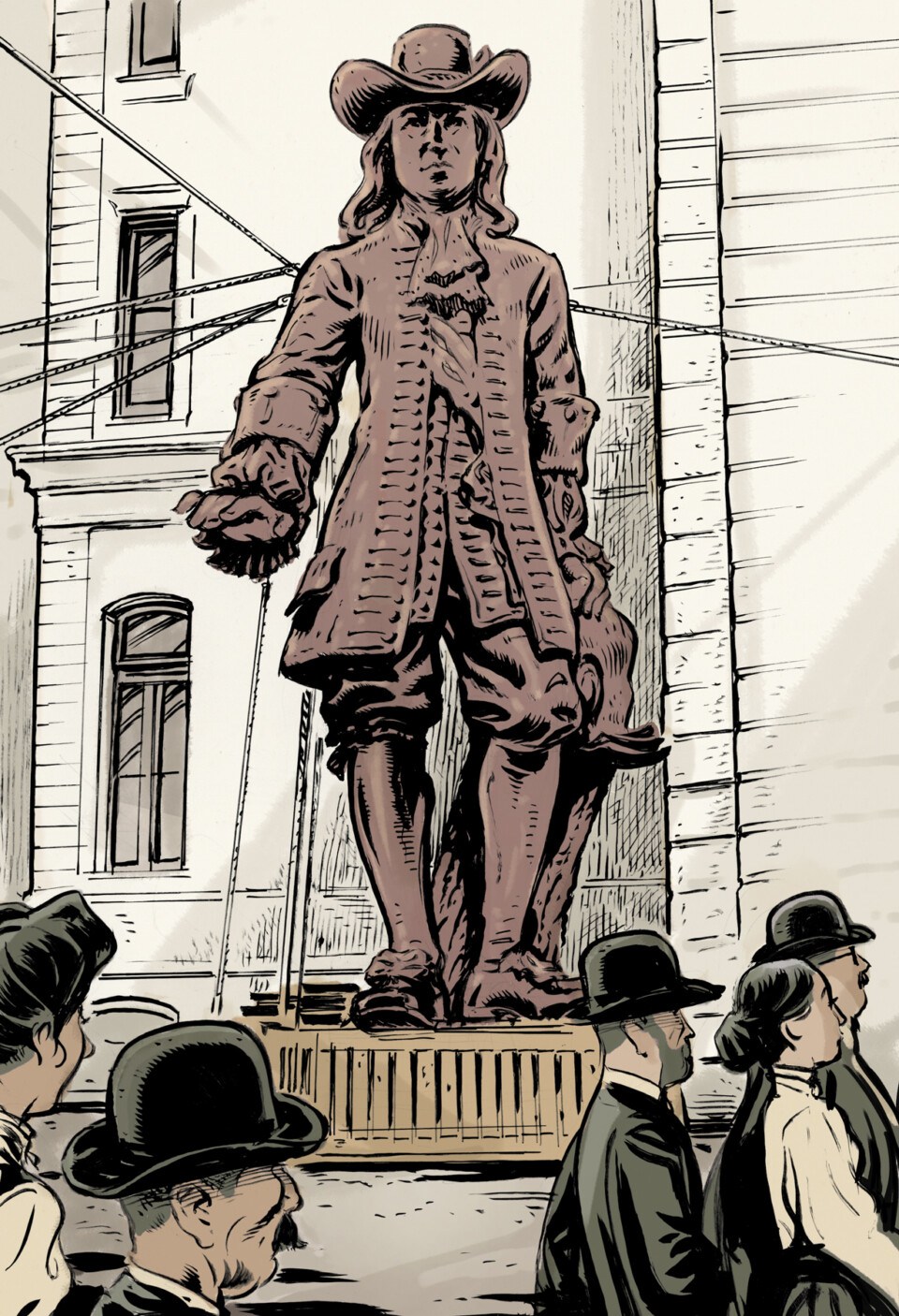
What we didn’t know at that point was that we were actually close to the bottom. A year later, in the summer of 1987, One Liberty Place opened up, breaking the so-called gentleman’s agreement that no building would rise higher than Billy Penn’s hat and signaling that Philadelphians were ready — hungry, actually — for a different way of doing things. I think you can see Ed Rendell’s election four years later in a similar what-the-hell-do-we-have-to-lose vein.
Rendell and his team helped stabilize the nearly bankrupt city’s finances, but just as important, Rendell began telling a different story about Philadelphia: We had an array of obstacles facing us, but we were a city that was doing everything it could to fight back, whether it was inviting commuters to stay in town after work one night a week or reimagining Broad Street as the Avenue of the Arts.
I’m convinced that’s Rendell’s reframing of Philadelphia’s narrative, while not enough to turn the city around on its own, did set the stage for some positive things to happen, from Stephen Starr opening the Continental in 1995 and kicking off a new kind of Philly nightlife to the 10-year tax abatement program Rendell’s successor, John Street, signed into law in 2000, teeing Center City up for a new era of residential growth. Slowly Philadelphians — and then the rest of the country — began to nod their heads when they heard a new, more upbeat Philadelphia story. One significant moment came in 2005 when National Geographic Traveler magazine named Philadelphia “America’s next great city.” Now, I’ve spent enough time in magazines to know there was nothing scientific about that take; for all we knew some junior editor had a kickin’ time at a wedding here one weekend and the story just grew from there. But who cared? The validation felt so good.
Things truly seemed to coalesce in the Nutter years. Millennials and empty-nest baby boomers began moving into Philadelphia in noticeable numbers, not only giving more juice to Center City but changing nearby neighborhoods like Grad Hospital, Point Breeze, Northern Liberties, and Fishtown. The Phillies got good again, and the restaurant scene, led by Starr, Marc Vetri, and Jose Garces, got even hotter. The city’s population actually ticked upward for the first time in 60 years. Not insignificantly, Philly seemed to be aligned with a broader Obama-era zeitgeist that prized things like bike lanes and green roofs and flash mobs.
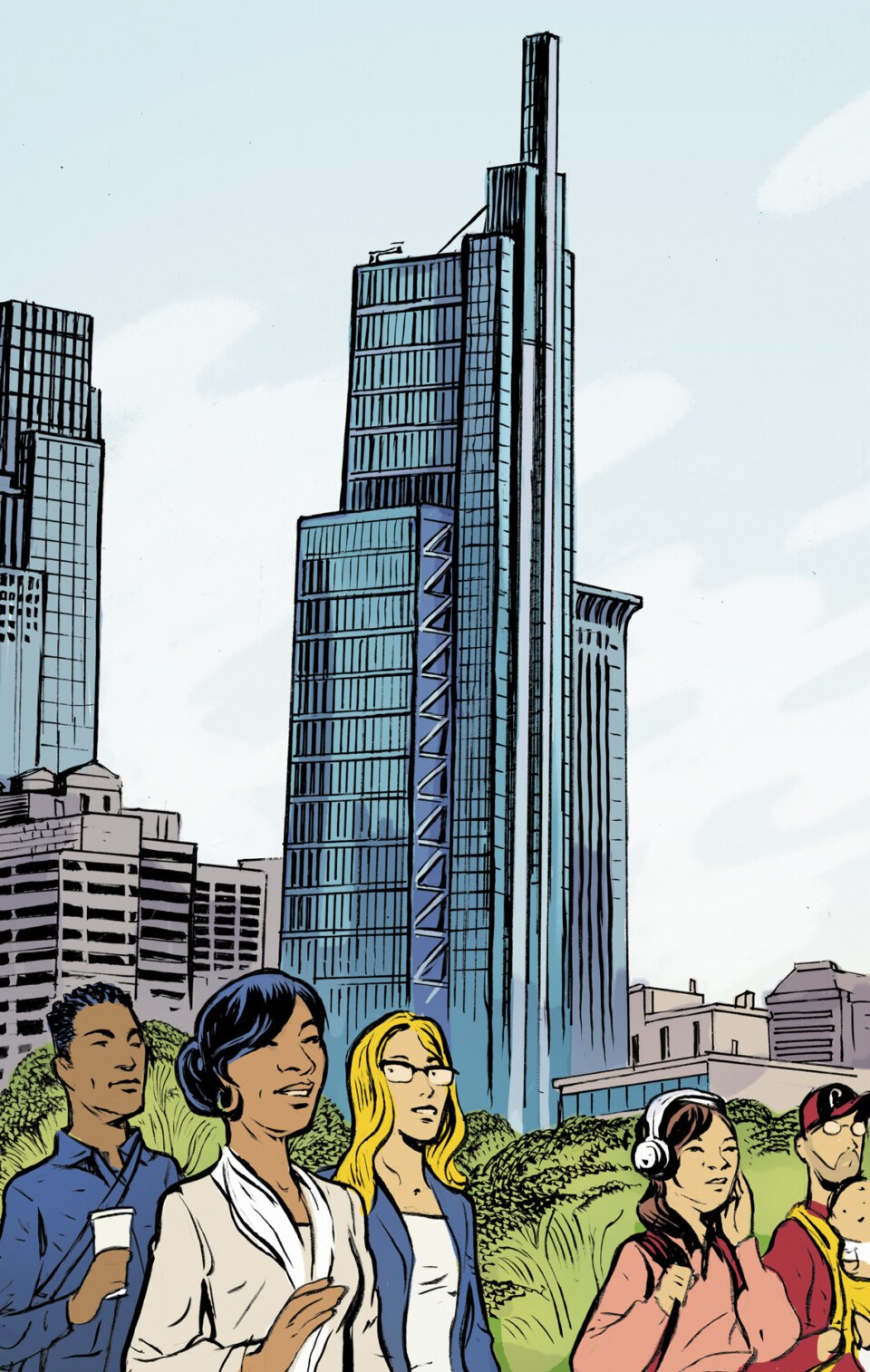
Rachel Smith was one of the so-called New Philadelphians who moved here during that period. A native Midwesterner, she decided she wanted to live in an East Coast city and picked Philadelphia, practically sight unseen. Smith didn’t know a soul when she got here, but it didn’t take long before she fell in love — not just with the guy who’s now her husband (they met during a rowdy night at Misconduct Tavern), but with Philadelphia.
“I was in my 20s. I was really loving what was happening downtown,” she says. “There was a huge boom in restaurants. There was Center City Sips and all these young professional ways to integrate into and operate within the city.” Smith’s life unfolded like a Philly-set millennial rom-com. She left the job she had at JPMorganChase and got one, of course, at Urban Outfitters (situated in the Navy Yard, itself a metaphor for Philly’s pivot from manufacturing town to sparkly young-person mecca). She and her husband got married in Old City and bought a house in Fishtown. Five years ago, ready to start a family, they decamped for the Main Line. But Smith, who today runs her own marketing firm, still feels connected to the city, and she and her husband still own the Fishtown house.
Narratives aren’t perfect, and I should note that the one we created around people like Rachel Smith — that millennials and boomers were driving Philadelphia’s resurgence — was at best incomplete, at worst inaccurate. First, while many people in, and some parts of, Philadelphia were doing really well, that certainly wasn’t true across the board. In 2011, in the wake of the Great Recession, Philly’s poverty rate climbed to 28 percent. Which raised the question: Could we be America’s next great city and its poorest one at the same time? (The answer is simple: No.)
But the other crucial way the narrative was off was in what — or who — was responsible for the population growth Philadelphia was suddenly seeing. Sure, millennials and baby boomers helped, but the real difference was made by people who’d built Philadelphia in the first place: immigrants.
I referenced 1876 before. It was the year one in five Americans came to Philadelphia to celebrate the country’s centennial. What they found when they got here was a city going through a thunderous transformation. At that point Philadelphia’s population was about 800,000. Twenty-five years earlier it had been just 120,000 — meaning we saw a more than sixfold increase in only a quarter century. Astonishing. And the growth didn’t stop. By 1900 our population was 1.3 million. By 1925 it was 1.9 million.
Driving most of that rise were immigrants, first from Ireland, Germany, and the U.K., then from Russia, China, Italy, and so many other places. All those new arrivals — and the Black citizens who already called Philadelphia home or moved here during the Great Migration that started in 1910 — fueled the city’s physical growth, with many Irish eventually pushing into West Philly, a large number of Eastern European Jews spreading into North Philly, Italians settling in South Philly. The presence of these different groups meant conflict — discrimination was rampant, rioting was not uncommon — but each new tribe added a distinct cultural or religious flavor to what had been an overwhelmingly white Protestant place.
The rise we’ve seen in immigration over the past 25 years hasn’t been as dramatic as what took place more than a century ago, but it’s still been plenty impactful. Native-born millennials and baby boomers helped our population increase, but the real boost came from the hundreds of thousands of Philadelphians born in other countries, with China, the Dominican Republic, India, Vietnam, and Jamaica leading this wave of immigration. They’re the ones who’ve made Philadelphia a growing city, not a shrinking one.
One thing that’s notable about this influx of people is that Philadelphia typically isn’t their first stop in the U.S. “Our migration is largely a secondary migration,” says the Welcoming Center’s Anuj Gupta. “We are not a primary port of entry in the way that New York, Chicago, D.C., Boston, and other metro regions are. But folks are hearing about Philadelphia, and they’re coming as a better alternative.”
Why are they hearing about Philadelphia? Because, no coincidence, starting around 25 years ago we intentionally started telling a story about ourselves as a city that wants immigrants. “We have built an ecosystem,” says Gupta, who as a grad student a quarter century ago wrote a paper for the Economy League arguing that Philadelphia was missing a massive opportunity when it came to immigration. “It constitutes policies, and investments by mayors and City Councils, and leadership from the business community. It sends a signal that this is a welcoming place.”
Gupta tells me a story about a man who came here a couple of years ago from Algeria. He had a PhD in engineering, but in Philly he was driving for Uber. He landed a job in California that was closer to his field, but six months later he was back in Philadelphia. Gupta asked him why. “I just felt more welcome here,” the man said.
From an economic standpoint, recent immigrants to Philadelphia mostly fall into two buckets, with about half working low-wage jobs and another 30 percent in high-wage jobs. But their economic power is undeniable. About a third of Philly entrepreneurs are foreign-born, and immigrants here are more likely than native-born Americans to be part of the overall workforce. They’re also more likely to have children. As a 2024 Pew report put it, “Immigrants … fill jobs, create businesses, own homes, and fuel entire industries at rates beyond their growing share of the city’s population. And their taxes help pay for public services and pensions.”
And this is to say nothing of the cultural impact they’re making, adding to the fabric of the city just as earlier groups did. You can see the influence in neighborhoods all over Philadelphia: Indian, Russian, and Ukrainian communities in the Northeast; Southeast Asian and Mexican/Central American communities in South Philly; African communities in Southwest Philadelphia; a Chinese community in Chinatown and Mayfair; Puerto Rican and Dominican communities in North Philly.
These are, of course, anxious days for people who’ve come here from other countries. “People are scared,” Danilo Burgos, the state rep, says when we speak one morning. “People are prohibiting themselves from going out at night, and our businesses are struggling because of it. People are looking over their shoulders to see if there’s an unmarked car following them. If you’re a person of color, and especially if you speak Spanish, you’re going to get stopped and questioned. Doesn’t matter if you’re an American citizen or not.”
Even so, Burgos continues, most people in his community are finding ways to move forward with their lives. The rest of us should be deeply grateful for that — and stalwart against anything that threatens it — given all that immigrants have given and continue to give to Philadelphia.
That surge in immigration we saw in the 19th and early 20th centuries? It came to an end in the mid-1920s, when a sector of Americans — stop me if this sounds familiar — freaked out that there were too many foreigners in the country, and politicians created far stricter immigration policies. You see the impact those laws had when you look at a graph of Philadelphia’s immigrant population since 1900. After rising in the first part of the 20th century, it crests and begins a steady decline over the next half century, bottoming out in the ’70s, ’80s, and ’90s. In the 21st century, it starts to significantly rise again.
When I first saw that graph, it startled me, and for a very specific reason: If you asked me to plot Philadelphia’s overall vitality over the past 125 years, I’d draw something that looked almost identical to that pattern of immigration. Growth. Decline. Rebirth.
Last fall, I spent a couple of days in D.C., staying in a hotel in NoMa, a neighborhood not far from Union Station that’s been revitalized over the past decade or so with new residences and office buildings and restaurants. The hotel was nice enough, but when I set out to find a place for dinner, I realized that many of the food options were either chains or what felt like prototypes for chains — which only reinforced the almost suffocatingly generic, corporate vibe of the whole area. If you asked someone — or better yet, asked AI — to create a new neighborhood from scratch, NoMa would be a correct answer. But that didn’t make it an interesting one.
Philadelphia, I’ll offer, is the opposite of that. Gentrification is not always a good thing, but even the Philly neighborhoods that have become trendier and pricier in recent years tend to be anchored by restaurants and shops and businesses that feel very local because they are. It’s one of many reasons that people so often refer to our city as “authentic” or “real.”
Kelsey McKinney is what we might call a New New Philadelphian, since she moved here from D.C. post-COVID, in 2022. (McKinney is a writer and co-created the popular podcast Normal Gossip.) When I ask her one day why she relocated, she says it wasn’t complicated: She just really liked Philadelphia. Indeed, whenever she came to visit a friend, McKinney would cry when it was time to head back to D.C. And so she packed up and moved to Queen Village, and she’s had zero regrets.
“Before I lived in Philadelphia, I thought people who loved where they lived were lying,” she says. “I thought they were the kind of people who fall in love with things very easily, and that it was a kind of psychosis they entered that was impossible for me to have. And then I moved to Philadelphia, and I just won’t shut the fuck up about it.”
Ha. When I drill down about why, she mentions our relatively affordable cost of living, which allows people to do things — from buying homes to going out more — they couldn’t in other cities. (The average rent in D.C. is 27 percent higher than in Philly.) But she also talks about a vibe that comes from the way Philadelphians interact with each other.
“When I first moved here, I felt like I was getting bullied a lot, but in a way that was fundamentally necessary for me as a person,” she says. She tells me about going to the Italian Market, ordering Parmigiano, and being presented with a sleeve that was roughly the size of her torso. “I asked the woman if she had anything smaller, and she said, ‘Why? You’ll eat it.’ And she was right. I would eat it.
“If you actually care about the people around you, you correct them, which I really value in Philadelphia,” she continues. “I think people here care about their communities really deeply.”
McKinney isn’t the only person who talked to me about Philadelphia in a vibes kind of way. Isaiah Thomas mentioned the cultural celebrations that fill our calendar year-round, from the Odunde Festival to the Rathayatra Street Festival to the Pulaski Day Parade. “Philly is a place where people enjoy each other’s cultures,” he said. “Food, music, festivals, parades.”
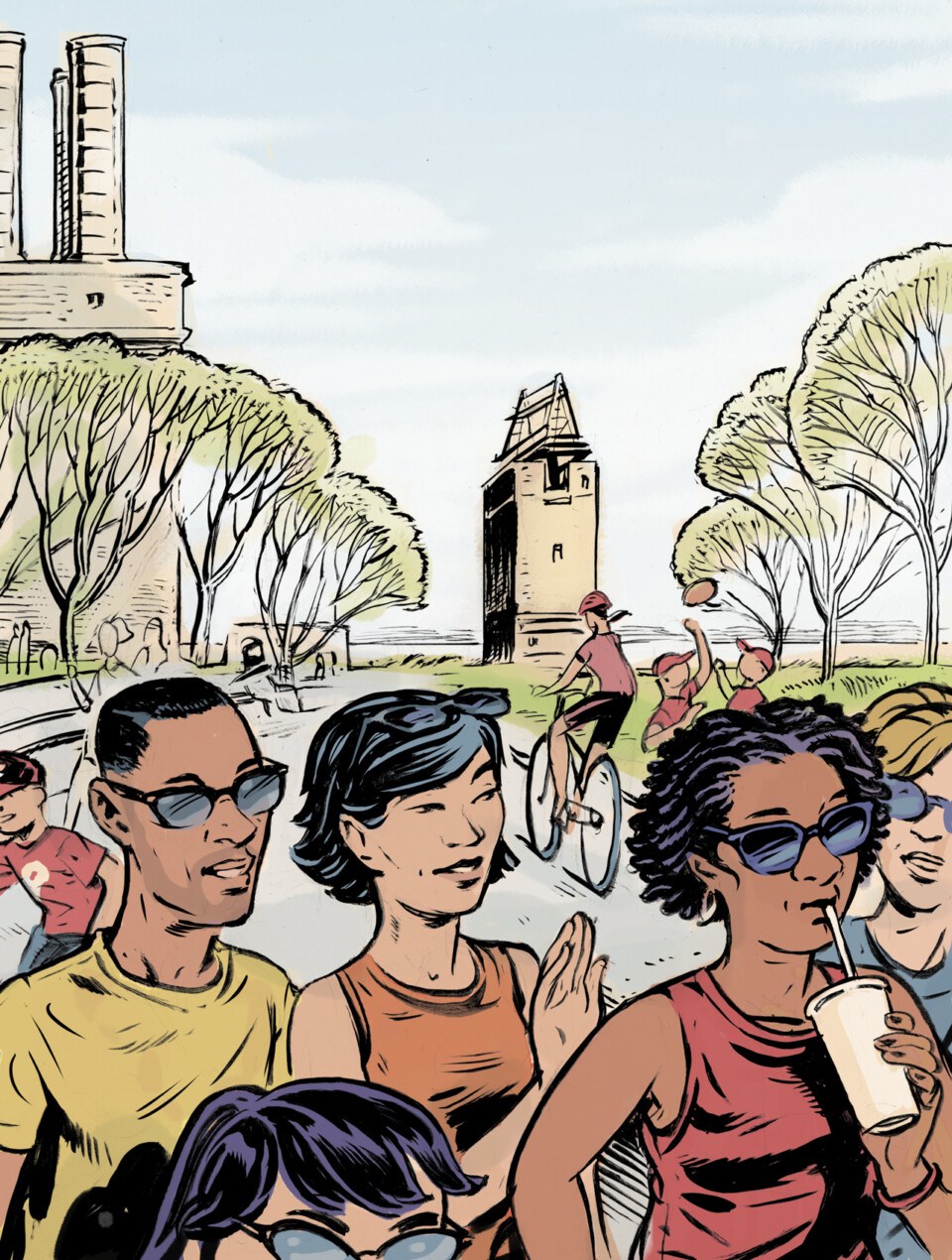
Rachel Smith contrasted Philly with Austin, a city that once basked in its weirdness but lately has been infiltrated by tech and finance types. “In Philadelphia, there’s a lot of richness in every neighborhood, and that has maintained,” she told me. “Whereas in Austin, it’s gotten corporate and vanilla.” A Texas-sized NoMa.
My sense is that Philly’s own “weirdness” — or authenticity, or grit, or whatever word you’d like to use — is a differentiator that will only become more important in the years ahead. We’re entering into an age when machines — AI — are going to dominate everything. Whether that turns out to be very good, very bad, or an odd mix of both is something we’ll soon find out. But in such a world, a city that leads with its realness, its humanness, has — to bring us back to the idea of counternarrative — wide and deep appeal, it seems to me. AI (and the world it’s ushering in) is powerful and analytical and ruthlessly efficient, but it’s incapable of being unexpected or cockeyed or illogically, unreasonably bold.
Philadelphia is all those things; it’s in our history, our DNA. There’s something kind of crazy, after all, about leaving the country where you were born and moving to a place where you might not speak the language and hardly know a soul, and yet our city was built, and continues to be built, by people doing exactly that. Similarly, there was something fairly outrageous about telling the king of England you were tired of all his nonsense and were going to start your own country. And yet, 250 years later — to bring us back to Independence Days — here we are.
I’m not trying to gloss over the big challenges Philadelphia has. We all know that narrative: Our schools need to be sharper. Our economy still needs to do a better job of offering more people more opportunity. The Trump administration’s policies — from budget cuts to the rounding up of foreign-born Philadelphians — could be crippling.
But let’s not let our problems define us. Yes, sometimes events dictate the story, but sometimes the story dictates events. So let’s embrace — for ourselves and the outside world — a different, more powerful narrative: We’re a city that was built by, is open to, and continues to exist for human beings. And human beings are capable of extraordinary things, if they just keep at it.
I think it’s a particularly American story, fitting for the American city. And we shouldn’t, not for a second, shut the fuck up about it.
Published as “The New Philadelphia Story” in the June 2026 issue of Philadelphia magazine.