Could Philly See Another Measles Outbreak?
The highly contagious disease is sweeping the United States. Philly currently has zero confirmed cases — a stark difference from the city's major outbreak 30 years ago. Are we more prepared this time around?
Listen to the audio edition here:
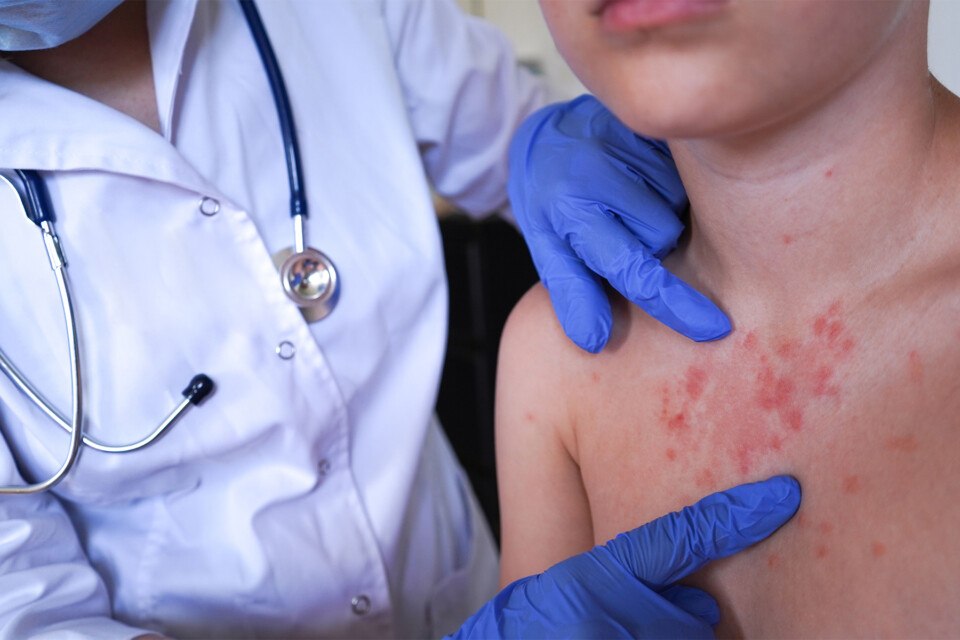
Measles, the highly contagious infectious disease that causes coughing, fevers, a rash, and, in serious cases, pneumonia, deafness, and neurological complications, is currently ripping through the United States. Though its vaccine has been around since 1963 and is highly effective, more than 2,300 people in 45 states have been infected so far this year — the highest number of confirmed cases in 35 years.
The outbreak is now on Philadelphia’s doorstep. Pennsylvania has recorded 202 cases so far in 2026 — more than we’ve had in three decades. Lancaster County, the epicenter of the state’s outbreak just 66 miles from Philly, has had 116 this year, while our neighbor, Chester County, has confirmed 21 cases since April. Plus, St. Luke’s Hospital in the Lehigh Valley just announced it is treating its first pediatric measles patient.
It’s a public-health gut punch. Measles, a preventable disease, was declared eliminated in the United States in 2000. At the time, vaccination rates were high — 95 percent of the population needs to be immunized to maintain herd immunity — and when cases did occur, public health officials could quickly trace and contain rubeola, the virus that causes measles. The vaccine served as a safety net, preventing people from falling ill.
That safety net is fraying. As more parents opt out of vaccinating their kids and as Health and Human Services Secretary Robert F. Kennedy Jr. downplays the need for vaccinations (though he has recently changed his tune on measles), the disease is making a nightmarish comeback.
“I do worry that some of the historic infectious diseases we thought were behind us will resurge,” says Carlene Muto, Temple Health’s VP of infection prevention and occupational health services. “It’s not just ‘I’m not getting vaccinated for measles.’ It’s ‘I’m not getting vaccinated for anything.’”
Part of the reason, experts say, is that measles’s virtual disappearance has made people less afraid of the disease. Few people remember when measles permanently damaged lungs — or even killed — children and adults who contracted it.
“Vaccines are victims of their own success,” Paul Offit, renowned CHOP immunologist and director of the hospital’s Vaccine Education Center, told us earlier this year. “People haven’t seen [the diseases], which means they’re more likely to be influenced by misinformation.”
Philadelphia has no confirmed cases at this time. Part of the reason is because the city’s vaccination rates remain high. More than 94 percent of Philadelphia kindergarteners were up to date on their measles vaccine during the 2023-2024 school year. In Lancaster County, by comparison, 88.5 percent of kindergarteners had received both doses heading into the 2024-2025 school year.
That doesn’t mean measles won’t reach Philadelphia; it has before. The city experienced a major outbreak in 1991 — Offit once told us that patient zero of the outbreak was a fan who attended an R.E.M. concert at the Spectrum. The outbreak ultimately centered on Faith Tabernacle Church in Nicetown, whose congregation refused to vaccinate its most vulnerable members.
Today, many people from nearby counties — and farther-flung parts of the state — come to Philadelphia for medical treatment. That’s one reason Muto is concerned, especially because she doesn’t see much public awareness of the current outbreak — partially because so many are busy freaking out about cyclosporiasis.
“I’m not sure everybody’s even aware there’s a [measles] outbreak,” she says.
The best protection against measles is the MMR vaccine. The first dose is 93 percent effective at preventing measles, says Eric Sachinwalla, Jefferson Health’s medical director of infection prevention and control. The second dose raises its efficacy to 97 percent. In rare cases, people need a booster, but for most folks, immunity lasts a lifetime. According to Pennsylvania Department of Health data, no one who has been fully vaccinated has contracted measles during the current outbreak.
If you’re not vaccinated? Good luck, our experts say. “Measles is probably the most contagious virus that exists,” Sachinwalla says. “If an infected person is in a room with 10 people who are not immune, approximately nine of those 10 people will become infected.” (For comparison, if you get the flu, you’ll only give it to one or two other people.)
If you were exposed but not vaccinated, doctors recommend getting the vaccine within 72 hours. Doing so can prevent illness and severe complications. Plus, you’ll get long-term protection, especially if you receive both doses. Early symptoms, Sachinwalla notes, include fever, malaise, and loss of appetite, followed by conjunctivitis, runny nose, and cough. Sometimes spots can develop in the mouth called Koplik spots, and about two to four days after the fever, a rash appears, typically first on the face before spreading down the body.
There is no treatment for measles, though doctors and researchers are working on one as repeated outbreaks become more common.
If you’ve been exposed and aren’t vaccinated, Muto says you should isolate at home for 21 days. That can be a hardship, especially for working adults and parents. “It’s tough for people who are working. It’s tough to keep your kid out of school for that long,” she says. But the payoff — for your own health and your community’s — is worth it.
People who can’t be vaccinated, including pregnant women and babies younger than a year old, can receive immune globulin, an IV medication, within six days of exposure. The treatment is in limited supply and can be difficult to access, though Temple has some available, Muto says.
The approach for young children is shifting. Some doctors are opting to give a dose of the measles vaccine to babies who are at least six months old and who live in areas where outbreaks are occurring. Known as “dose zero,” this won’t offer the long-term protection of the traditional, two shot series, but it can protect them for a limited time.
“If a family needs to travel with an infant between six months to one year of age) they should speak with their healthcare professional about whether an early dose of MMR is indicated,” Sachinwalla says. “Similarly, if you live in an area where measles cases are occurring, I suggest discussing with your healthcare professional about timing of vaccination.”