The Doctor Will See You Now — On Your Laptop
Telehealth has evolved far beyond urgent-care visits. Here’s why more Philadelphians are choosing a primary-care physician they may never meet in person.
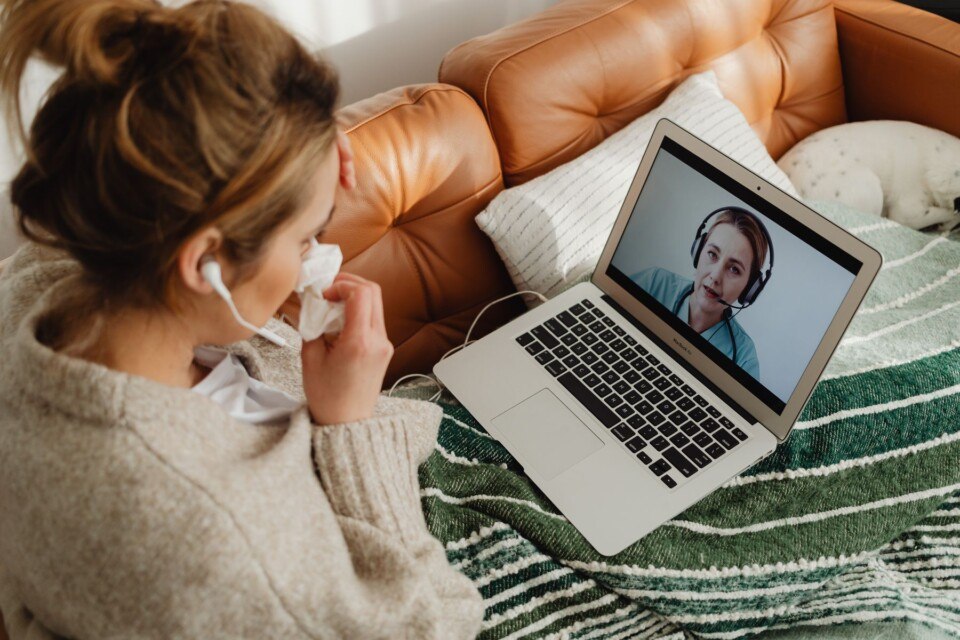
Local providers like Main Line Health and Penn Medicine continue to expand their telehealth options.
Listen to the audio edition here:
Log onto your computer or phone for an appointment with Jefferson Health family medicine physician Ed Buchanan, and he might ask you to close your eyes, keep them shut, and try to open them with your fingers. Or hold up your arms. Or, simply, look into your camera and smile. The basic neurological exam is one of many telemedicine techniques Buchanan uses to assess patients from afar, people he probably won’t ever meet in person.
Telehealth boomed during COVID-19 lockdowns in 2020, and most of us are familiar by now with the occasional urgent online appointment for a hacking cough. But local providers like Main Line Health and Penn Medicine continue to expand virtual care, and comprehensive, preventive primary care via internet connection is increasingly an option.
Buchanan has a roster of regular patients — ranging in age from 18 to 97 — through Jefferson Health’s growing virtual primary-care program, which launched in 2024. He says online appointments can help you manage chronic conditions like diabetes, and reveal a lot about your health, with an eye toward quality of life and longevity.
Expanding Primary Care Access
“A lot of our patients are people who wouldn’t normally show up in an office,” Buchanan says. Whether due to inconvenience, months-long waits for in-person appointments, or mobility challenges, these patients have tended to bypass regular, in-office medical care. Instead, they use urgent clinics for acute illness, or one-off telehealth appointments (for weight-loss drugs like Ozempic, for example) and see specialists whose services aren’t being coordinated by a primary-care physician.
Which is short-sighted, says Buchanan.
Health-care delivery systems “that are based on primary care rather than on specialists tend to have much better health outcomes,” he says, noting that primary-care doctors keep track of life-saving checklist items like vaccinations and colonoscopies.
With appointments often being available within a few days of request, Jefferson’s virtual practice aims to foster those ongoing relationships. According to Anna Flattau, chief of primary care at Jeff, about nine percent of their system’s new primary-care patients — across all income levels — are opting for virtual visits, with up to 500 signups a month. She anticipates the number will eventually reach 20 percent. Jefferson Health is also piloting a virtual primary-care program for adolescents and adults with complex childhood-onset conditions like autism, cerebral palsy, and Down syndrome who otherwise may have to travel hours for specialized care.
A Successful Formula for Virtual
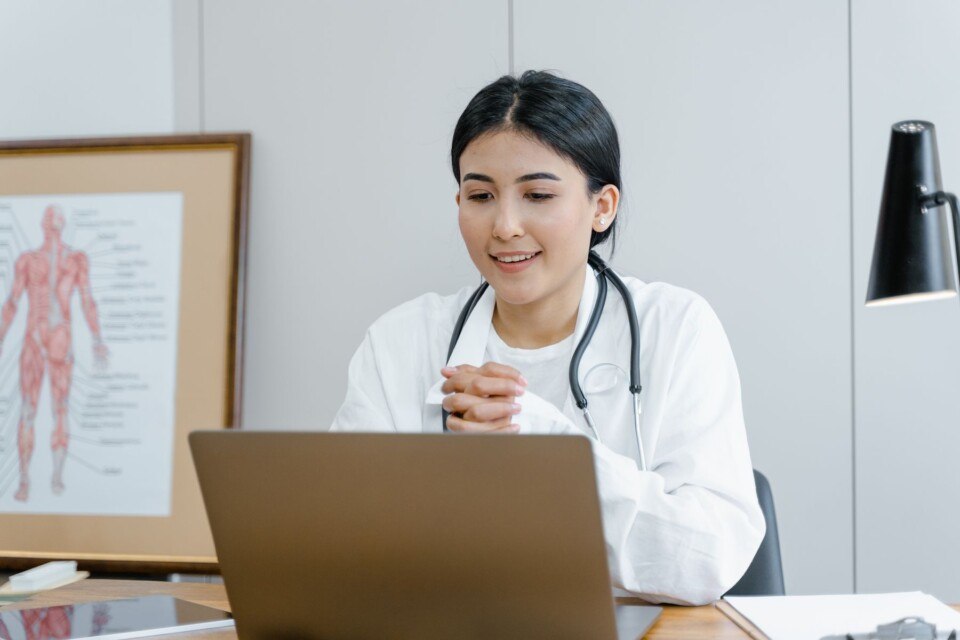
“There is a saying in medicine that about 80 percent of your assessment of a patient is done by their history,” says Buchanan, who notes that he can also tell a lot from a person’s breathing and posture in a telehealth appointment.
Seeing patients in their living rooms is helpful, too. First, he gets a glimpse into the health of their home. “That may help me to decide, do they need a social work consult or home services?” Another benefit: Patients are often more relaxed because they’re in familiar surroundings.
In-person care is sometimes unavoidable, of course. Chest pain, for one. A cut big enough to require stitches. Even the routine involves some legwork. Buchanan directs patients to the pharmacy for vaccinations and a lab for blood tests. But he also makes the most of a patient’s history, test results, and even photographs they share with him through a secure online system.
One sticking point of virtual primary care is blood pressure. Most people own a thermometer, but not the cuff that measures this revelatory vital sign. Buchanen suggests his patients buy an at-home cuff and share the readings with him. For those who can’t afford them, he regularly prescribes the cuffs because some insurance companies will cover the purchase.
Among the simple tips for patients preparing for a virtual appointment, Buchanan recommends:
- Think about who’s within earshot. Online appointments have an advantage that caregivers or family can easily sit in, which some patients like. But the doctor will ask personal questions; plan your setting for your comfort. Health privacy rules apply on the provider’s end. Buchanan uses a closed back office in his home.
- Silence your notifications and other incoming calls and messages.
- Don’t drive while being examined. (Yes, Buchanan says, he has logged on to see trees whizzing out the car window behind a patient.)
Manage your expectations, too. Yes, telemedicine cuts out travel time to an office, but there’s a virtual waiting room, and the doctor may be running behind. And don’t stress too much about the platform. Jefferson patients see a medical assistant before the physician gets on the call (similar to the pre-check in an office), and that person can troubleshoot tech issues for you. Buchanan says using a computer gives him a wider view, but phones are fine; roughly half his patients use them.
He acknowledges that virtual primary care isn’t for everyone, and he gladly helps patients who don’t take to the format find an in-person alternative for their care. But if you’re skipping out on a family medicine doctor because of inconvenience, an online appointment can make a meaningful difference.
“You’d rather see me for your hypertension than [if it goes untreated] seeing a neurologist for the stroke that you get 10 years down the road. I couldn’t tell you how many people I’ve found who didn’t know they had diabetes. I’ve found a lot of cholesterol issues where these people had no clue,” Buchanan says. “That appointment changed their health outcome.”

This primary-care health series is made possible by a generous donation from PCOM.